Bitcoin Price Structure
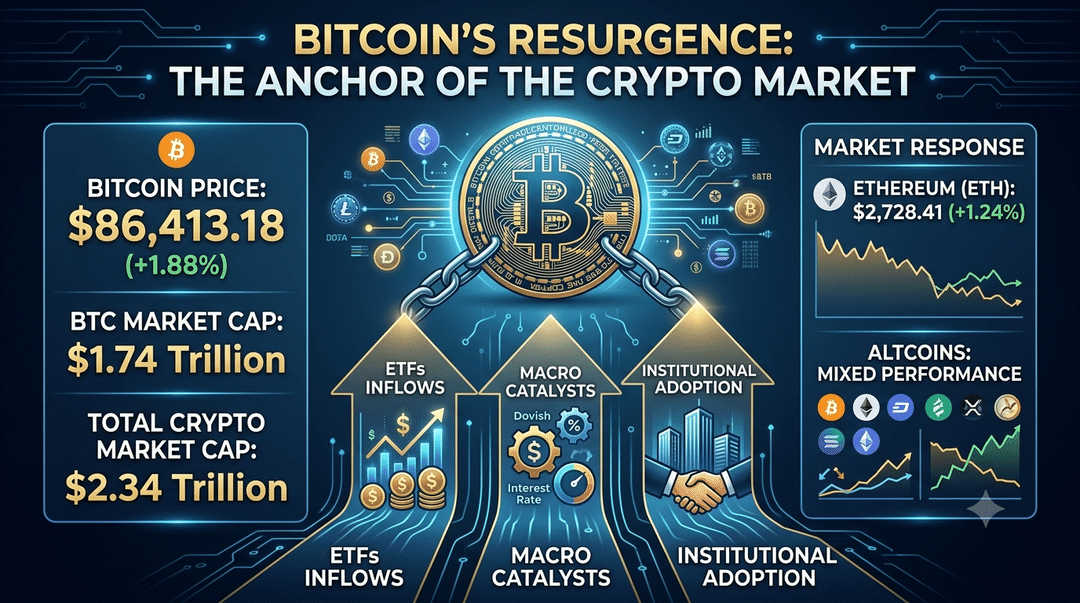
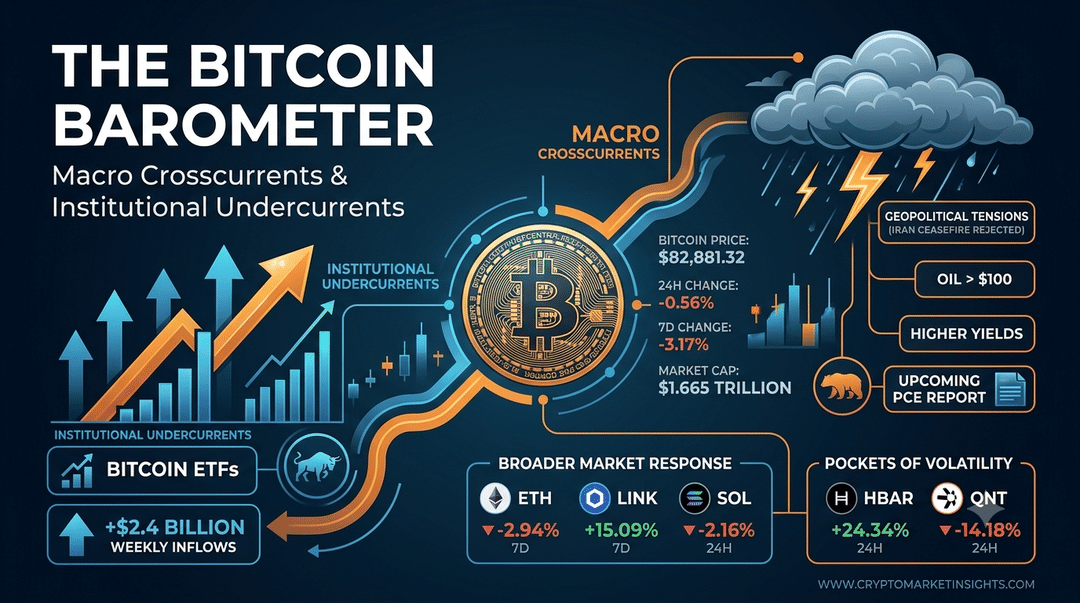
As of the latest data, Bitcoin is trading at approximately $85,503.08. Over the past 24 hours, BTC has experienced a minor retraction of -0.51%. However, looking at the weekly performance, Bitcoin has posted a notable gain of 2.93%, suggesting underlying strength despite short-term fluctuations. Bitcoin's market capitalization stands at a substantial $1.718 trillion, firmly cementing its position as the largest cryptocurrency by a significant margin. This figure represents a considerable portion of the total crypto market capitalization, which is currently around $2.358 trillion. The 24-hour trading volume for BTC reached $23.17 billion, indicating robust liquidity and active participation.
This market-cap dominance and consistent trading volume highlight Bitcoin's central role in the digital asset ecosystem. Its short-term movements, while occasionally volatile, often reflect broader market sentiment, with its weekly performance indicating a mildly positive bias that sets the tone for other assets. The observed fact is the price, market cap, and percentage changes; the interpretation is that these figures underscore Bitcoin's foundational position and influence.
Why Bitcoin Is Driving The Tape
Bitcoin's current market leadership is not merely a function of its size but is underpinned by a series of significant catalysts, particularly in the institutional and regulatory spheres. Recent news signals point to a growing embrace of Bitcoin by traditional finance, which continues to fuel its momentum.
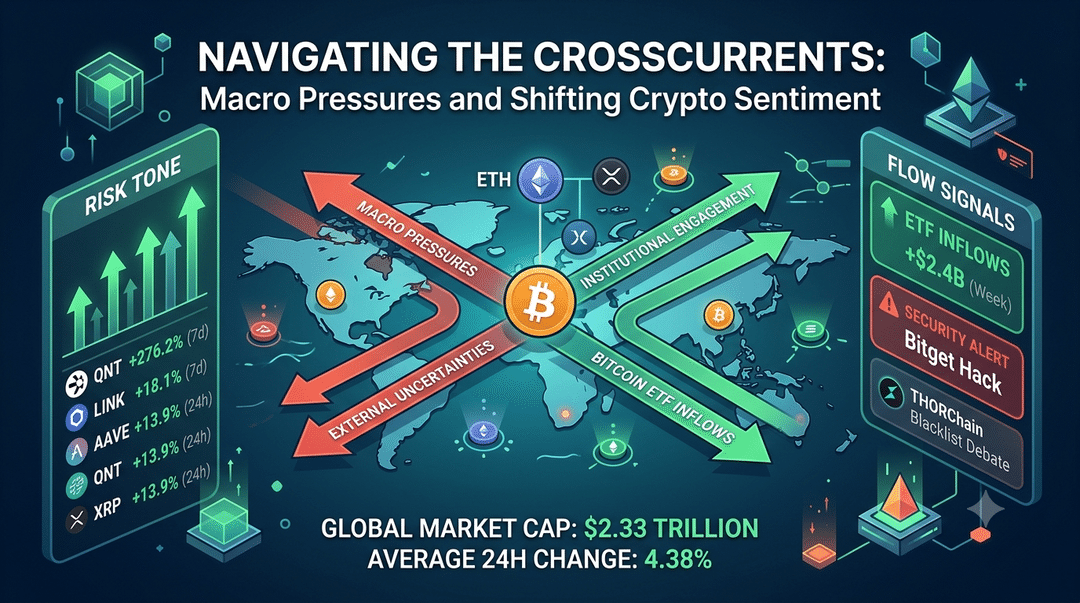
One of the most impactful developments is the sustained inflow into Bitcoin Exchange-Traded Funds (ETFs). Bitcoin ETFs have now recorded their third consecutive week of inflows, a clear indication of consistent institutional demand. This contrasts with Ether ETFs, which have experienced outflows during the same period, further highlighting Bitcoin's relative strength and appeal to institutional capital. The approval by the SEC of 3x leveraged Bitcoin and Ethereum funds for trading on a U.S. exchange, while carrying inherent risks due to leverage, signifies a continued regulatory pathway for more complex crypto investment products. This regulatory clearance, observed as a fact, can be interpreted as a step towards greater integration of crypto derivatives into mainstream financial markets, potentially increasing accessibility and liquidity for Bitcoin exposure.
Furthermore, corporate strategies are increasingly aligning with Bitcoin accumulation. Metaplanet, for instance, has revealed a revised capital allocation framework, proposing to allocate as much as 15% of its total assets to strategic investments specifically to fund its Bitcoin accumulation. This move by a publicly traded company to integrate Bitcoin into its treasury strategy mirrors earlier moves by other institutional players and reinforces the narrative of Bitcoin as a strategic reserve asset.
On the macroeconomic front, Bitcoin's recent surge to $86,000, as reported earlier in the month, was partly attributed to "cooler inflation and two dovish Fed speakers." This suggests that Bitcoin continues to be sensitive to broader economic indicators and central bank policy, often acting as a hedge or a beneficiary of shifting monetary conditions. The anticipation of key economic data, such as payrolls and CPI, also plays a role in short-term price movements, with market participants often positioning themselves based on these expectations. While a definitive link between every macro event and Bitcoin's price cannot be overstated, the observed correlation suggests that macro factors contribute to its overall market narrative.
Finally, while speculative, the mention of Bitcoin potentially reaching as high as $600K by 2029 by figures like Peter Brandt, as noted in a recent Hodler’s Digest, contributes to long-term bullish sentiment and market narratives, even if such predictions are not guaranteed outcomes. This type of commentary, combined with regulatory appointments like former SEC boss Jay Clayton leading an AI push, keeps the broader conversation around digital assets and their future trajectory active.
How The Rest Of The Market Is Responding
The broader cryptocurrency market is largely responsive to Bitcoin's movements, with many assets either confirming or lagging BTC's direction. The overall market sentiment, as derived from recent observations, shows a mildly positive short-term bias, largely influenced by Bitcoin's performance.
Among the priority assets, Ethereum (ETH) has mirrored Bitcoin's short-term dip, with a 24-hour change of -0.43%. Its 7-day performance shows a gain of 1.34%, which is positive but less pronounced than Bitcoin's. News of Bitmine purchasing an additional $41 million in Ethereum, pushing its holdings close to a 5% supply target, indicates strong institutional interest in ETH specifically. However, the contrasting outflows from Ether ETFs compared to Bitcoin ETFs suggest a divergence in institutional investment trends between the two largest assets.
Solana (SOL) has also seen a minor 24-hour decrease of -0.22% but a healthier 7-day gain of 2.11%. A notable development for Solana is its debut of an institutional settlement standard, built with input from J.P. Morgan, allowing for atomic trade settlements in seconds. This is a significant step for institutional adoption within the Solana ecosystem, potentially contributing to its independent strength.
XRP, another priority asset, has experienced a 24-hour decline of -0.83% and a modest 7-day gain of 0.83%. Its performance appears to be less correlated with the broader market's mildly positive bias, possibly influenced by ongoing regulatory discussions and the appointment of Jay Clayton, who previously launched crypto lawsuits, to a new federal role.
Looking at the top volatile assets, some altcoins are demonstrating significant independent moves. Near Protocol (NEAR) has shown robust performance, surging by 8.54% in 24 hours and 13.53% over seven days. Similarly, Quant (QNT) has posted strong gains of 7.02% in 24 hours and 10.11% over seven days. These movements suggest that while Bitcoin sets the overall tone, specific projects with their own catalysts can exhibit strong independent rallies. Conversely, Stellar (XLM) stands out with a negative 24-hour change of -4.25% and a 7-day decline of -5.63%, indicating localized selling pressure.
In summary, the market exhibits a nuanced response: major cryptocurrencies like ETH and SOL generally track Bitcoin's direction but with varying degrees of momentum, sometimes influenced by their own specific news. Meanwhile, a selection of altcoins demonstrates higher volatility and can diverge significantly based on project-specific developments or market dynamics, even within an environment led by Bitcoin.
Conclusion and Risk Management
Bitcoin's position as the primary driver of the cryptocurrency market remains evident, with its price structure and a confluence of institutional and regulatory catalysts setting the pace. The sustained inflows into Bitcoin ETFs, coupled with corporate accumulation strategies and a macro environment that occasionally favors digital assets, underscore BTC's foundational role. While the broader market, including major altcoins like Ethereum and Solana, generally follows Bitcoin's lead, individual assets can exhibit distinct performance based on their unique developments and market narratives. The observed fact is that the overall asset basket currently shows a mildly positive short-term bias.
Looking ahead, Bitcoin's trajectory will likely continue to be influenced by institutional adoption trends, further regulatory clarity, and macroeconomic shifts. Should these positive catalysts persist, Bitcoin could maintain its upward momentum, potentially pulling the wider market along. However, the inherent volatility of the crypto market means that swift reversals are always a possibility.
For market participants, effective risk management remains paramount. The approval of leveraged funds, while a sign of market maturity, also introduces heightened risk. Investors should be aware that while Bitcoin's dominance provides a strong directional signal, individual altcoin performance can vary widely. Monitoring key Bitcoin-specific news, particularly around institutional flows and regulatory updates, will be crucial for understanding potential market shifts. A balanced perspective that acknowledges both Bitcoin's leadership and the independent dynamics of other assets is essential for navigating the current crypto landscape.
Source Data Reference
Market Snapshot Input
| Asset | Symbol | Price (USD) | 24h Change | Market Cap (USD) |
|---|---|---|---|---|
| Bitcoin | BTC | 85,503.084114 | -0.51% | 1,718,109,660,067 |
| Ethereum | ETH | 2,701.199159 | -0.43% | 329,844,604,293 |
| XRP | XRP | 1.498114 | -0.83% | 94,520,478,585 |
| Solana | SOL | 120.136558 | -0.22% | 70,686,632,915 |
| Near Protocol | NEAR | 5.267204 | 8.54% | 6,890,485,250 |
| Hyperliquid | HYPE | 93.847981 | 3.98% | 20,876,081,058 |
| Pump.fun | PUMP | 0.006353 | -0.30% | 2,949,113,691 |
| Stellar | XLM | 0.214337 | -4.25% | 7,513,722,723 |
| Quant | QNT | 267.02565 | 7.02% | 3,223,730,712 |
| BNB | BNB | 781.981427 | -1.22% | 104,127,871,070 |
Trending Headlines Input
- SEC Clears 3x Leveraged Bitcoin and Ethereum Funds for Trading
- Former SEC boss made AI Czar, Bitcoin may hit $600K this cycle: Hodler’s Digest
- Solana Debuts Institutional Settlement Standard With J.P. Morgan Input
- Bitcoin ETFs notch third inflow week as Ether ETFs shed $138M
- Trump Taps Jay Clayton, the SEC Chair Who Sued Ripple, to Lead AI Push
- Metaplanet reveals net income strategy to fuel Bitcoin accumulation
- Bitmine Buys $41M More Ethereum, Reaching 99% of Its 'Alchemy of 5%' Target
- Chainalysis Used AI to Trace the $387M Bitget Hack Back to North Korea
- 'Uptober' Off With a Bang as Bitcoin Surges to $86K
- NEAR Intents recovers entire stolen $3.8M after ultimatum to exploiter