Risk Tone Across The Market
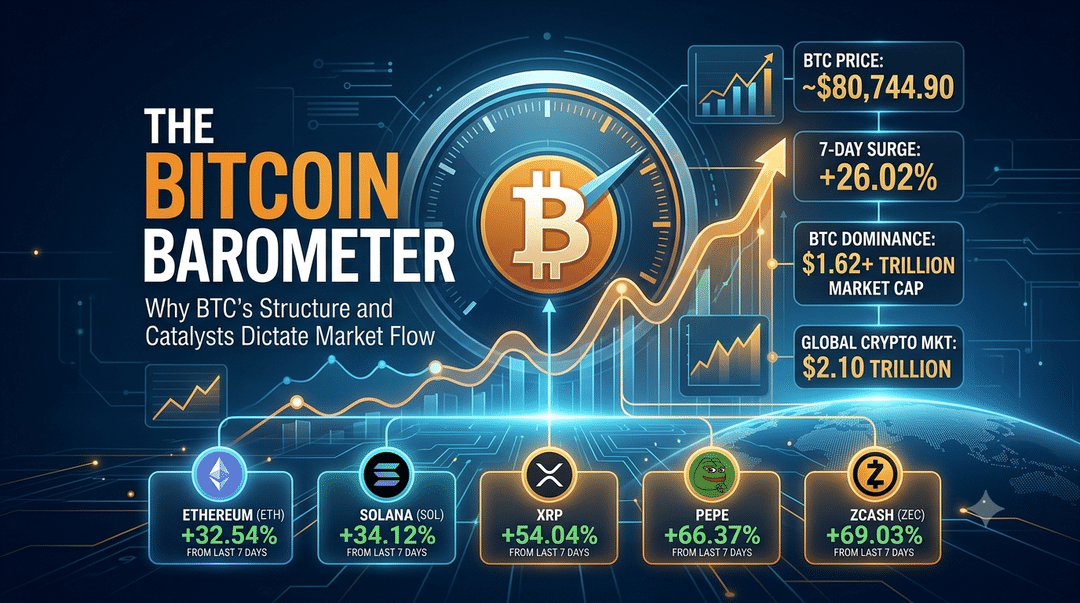
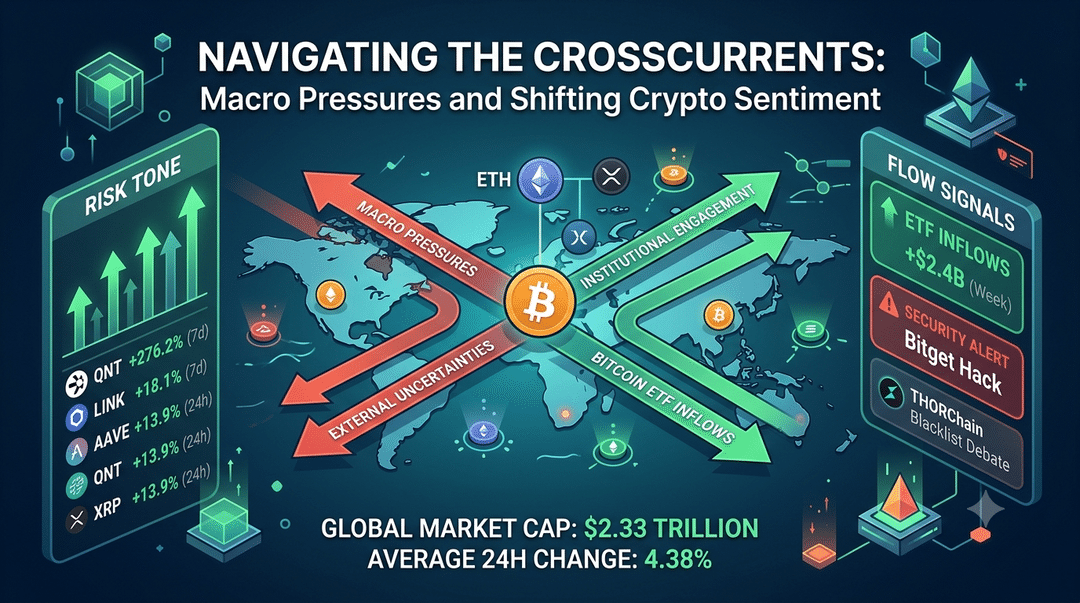
The overall market backdrop suggests a mildly positive short-term bias, as indicated by recent observations. The global cryptocurrency market capitalization stands at approximately $2.33 trillion, with an average 24-hour price change across a selection of assets around 4.38%. This aggregate figure, however, masks significant divergences in performance and underlying risk appetite.
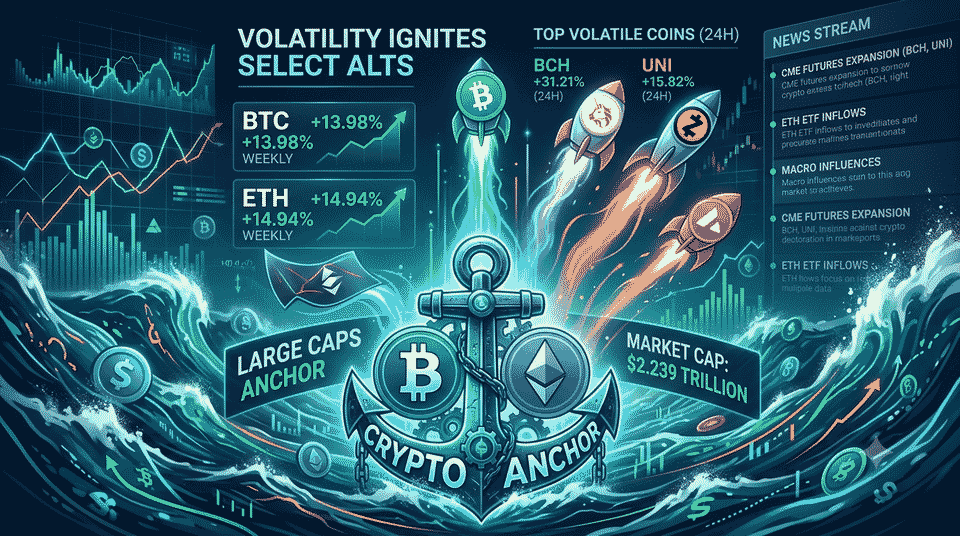
Observed facts indicate that the strongest 24-hour moves are concentrated in specific altcoins, signaling a selective "risk-on" appetite among market participants. Quant (QNT) has seen a remarkable 12.59% increase in the last 24 hours, extending its 7-day gains to an impressive 276.20%. Similarly, Chainlink (LINK) is up 11.88% over 24 hours and 18.14% over seven days, while Aave (AAVE) shows a 13.85% 24-hour surge and an 18.45% increase over the week. These figures suggest that capital is flowing into specific higher-beta assets, indicating a willingness to take on increased risk in areas perceived to have strong catalysts or momentum.
In contrast, major assets like Bitcoin (BTC) and Ethereum (ETH) have experienced more modest 24-hour gains of 1.31% and 2.21% respectively, with both showing slight pullbacks over the 7-day period (-2.62% for BTC and -1.5% for ETH). This divergence implies that while there's an appetite for risk in certain segments, the broader market, particularly the foundational layer, is subject to different, possibly more cautious, influences. The underperformance of Zcash (ZEC), with an 8.88% decline over 24 hours and a 6.07% drop over seven days, further highlights this selective risk-taking, as capital appears to be rotating out of some assets while seeking opportunities in others.
Macro and Flow Signals
Several key headlines are currently shaping market sentiment and influencing positioning, ranging from institutional inflows to security incidents and broader macroeconomic developments.
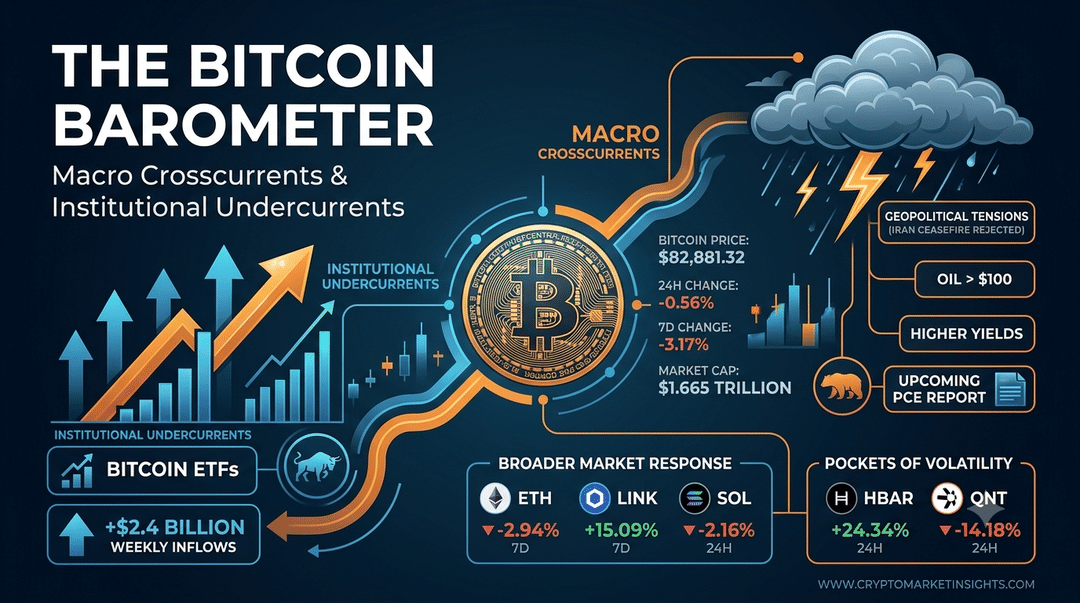
A significant positive flow signal comes from the institutional side, with Bitcoin ETFs attracting $2.4 billion in what has been described as the biggest inflow week since October 2025. This influx of capital into spot Bitcoin ETFs, alongside fresh capital for Ether and XRP ETFs, underscores continued institutional demand and provides a fundamental tailwind for the broader market. However, it's observed that daily inflows slowed as Bitcoin pulled back from levels above $87,100, suggesting that even strong institutional interest can be tempered by price action or other market dynamics.
On the security front, the market has contended with the fallout from a substantial $388 million hack on the Bitget exchange. Reports indicate that the hack exploited a third-party security vulnerability, with some stolen assets frozen, but a significant portion swapped into unfreezable ETH via THORChain before stablecoin issuers like Circle and Tether could act. THORChain, in particular, has come under scrutiny for its refusal to blacklist addresses linked to the hack. This series of events introduces a layer of caution, reminding participants of the inherent security risks in the ecosystem and potentially dampening overall market confidence, particularly for assets involved in cross-chain operations or those associated with affected platforms. Chainlink's subsequent announcement of CCIP 2.0, allowing institutions to add their own bridge checks, can be interpreted as a proactive measure to address such security concerns and potentially bolster institutional confidence in cross-chain solutions.
Macroeconomic pressures are also playing a role. Bitcoin's recent pullback has been linked to broader geopolitical events, specifically a report that "Trump's Iran Snub Sends Oil, Yields Higher." Such external macro events, which drive up traditional market volatility and perceived risk, can lead to a reduction in risk appetite across all asset classes, including cryptocurrencies. This demonstrates the increasing interconnectedness of crypto with global financial and political landscapes.
Regulatory developments continue to contribute to market uncertainty. The US SEC followed the CFTC in issuing staff guidance for crypto, particularly on how federal securities laws might apply to token issuers, following the failed cloture vote on the CLARITY Act. While not an outright negative, the ongoing need for "guidance" instead of clear legislative frameworks perpetuates a state of regulatory ambiguity that can deter some institutional players and influence market positioning.
What Sentiment Is Doing To Major Coins
The prevailing sentiment, a blend of institutional optimism and external pressures, is manifesting differently across major cryptocurrencies.
Bitcoin (BTC), despite recent ETF inflows, has seen its rally slow. Its price action reflects a mixed sentiment: institutional demand provides a floor and long-term bullish outlook, yet it remains susceptible to macro headwinds like geopolitical tensions driving up oil and yields. The discussion around "Bitcoin's Quantum Problem" and research efforts to address it, while not an immediate price driver, highlights long-term technological considerations that could influence future institutional confidence. Its 24-hour gain of 1.31% is modest, and the 7-day decline of 2.62% suggests a recent cooling off from higher levels, indicating that macro factors are currently exerting more immediate pressure than sustained buying momentum.
Ethereum (ETH), similar to Bitcoin, has attracted fresh capital to its ETFs, indicating growing institutional interest. However, Ethereum's sentiment is also influenced by the Bitget hack, specifically the use of THORChain to swap stolen funds into ETH. While Vitalik Buterin's comments on Ethereum evolving beyond a mere blockchain into a "world cryptographic computer" are fundamentally positive, the immediate sentiment is a balance between these long-term bullish narratives and the short-term security concerns impacting the wider ecosystem. ETH's 24-hour gain of 2.21% and 7-day decline of 1.5% mirrors Bitcoin's cautious trajectory.
Quant (QNT) is a standout performer, with a 24-hour gain of 12.59% and a remarkable 7-day increase of 276.20%. This significant surge suggests strong, localized positive sentiment, likely driven by project-specific developments or speculative interest. It demonstrates that despite broader market caution, targeted risk appetite exists for projects with perceived strong fundamentals or unique value propositions, even if not explicitly detailed in current news flows.
Chainlink (LINK) has also shown strong performance, up 11.88% over 24 hours and 18.14% over seven days. This positive sentiment appears to be supported by developments like the launch of CCIP 2.0, which enables institutions to add their own bridge checks. This move directly addresses security concerns prevalent in the cross-chain space, potentially enhancing trust and adoption for Chainlink's oracle and interoperability solutions among institutional clients.
Other assets like Aave (AAVE), with a 13.85% 24-hour gain, and Stellar (XLM), up 8.34%, also reflect pockets of strong positive sentiment. Aave's performance suggests renewed interest in the DeFi sector, while XLM's move could be tied to broader payment-focused narratives. Conversely, Zcash (ZEC) stands out with an 8.88% drop in 24 hours, indicating a distinct negative sentiment or profit-taking against the backdrop of more selective risk appetite. XRP and Solana (SOL), while mentioned in an older headline as "keeping climbing" despite Bitcoin slowing, show more moderate 24-hour changes of 1.17% and 0.94% respectively, with XRP still down slightly over 7 days. This suggests their momentum may have moderated or they are also subject to the broader mixed market sentiment.
Conclusion and Risk Management
The current cryptocurrency market is characterized by a complex interplay of forces. On one hand, there's clear evidence of increasing institutional engagement, particularly through ETF inflows for Bitcoin, Ethereum, and XRP, which provides a fundamental layer of support and long-term optimism. This suggests that the market is maturing and attracting serious capital. On the other hand, the market remains highly sensitive to external factors, including macroeconomic shifts, geopolitical events, and significant security incidents. The Bitget hack, for example, serves as a stark reminder of operational risks, while global events impacting oil prices and bond yields can quickly translate into reduced risk appetite for digital assets.
The observed facts indicate a mildly positive short-term bias, but this is not uniform. Risk appetite is selective, concentrating in high-momentum altcoins like QNT, LINK, and AAVE, while major assets like BTC and ETH navigate a more balanced landscape of positive flows and macro headwinds. This highlights that short-term market direction is being shaped less by singular narratives and more by the aggregate tone of these cross-market catalysts.
For market participants, this environment necessitates a balanced and adaptable approach. The potential for rapid sentiment shifts and reversals remains high. While institutional inflows offer a degree of stability, macro pressures and security concerns can quickly erode confidence. Monitoring both headline flow (especially those pertaining to regulation, institutional adoption, and security) and the broader economic landscape is crucial. Differentiating between asset-specific momentum driven by unique catalysts and broader market movements influenced by macro conditions will be key to understanding positioning. As always, market participants should assess their own risk tolerance and consider the potential for volatility in this dynamic environment.
Source Data Reference
Market Snapshot Input
| Asset | Symbol | Price (USD) | 24h Change | Market Cap (USD) |
|---|---|---|---|---|
| Quant | QNT | 256.022921 | 12.59% | 3,090,897,650 |
| Bitcoin | BTC | 83,742.659665 | 1.31% | 1,682,467,243,393 |
| Chainlink | LINK | 15.291271 | 11.88% | 11,439,399,511 |
| Ethereum | ETH | 2,704.260417 | 2.21% | 330,163,670,864 |
| XRP | XRP | 1.49889 | 1.17% | 94,249,048,581 |
| Aave | AAVE | 167.338686 | 13.85% | 2,579,763,971 |
| Solana | SOL | 118.950488 | 0.94% | 69,925,348,453 |
| Zcash | ZEC | 1,408.784374 | -8.88% | 23,003,010,227 |
| Stellar | XLM | 0.228702 | 8.34% | 8,007,638,614 |
| BNB | BNB | 763.41954 | 0.43% | 101,656,630,664 |
Trending Headlines Input
- Bitget CEO says $388M hack exploited third-party security vulnerability
- Bitcoin ETFs draw $2.4B in biggest inflow week since October 2025
- Bitget resumes Bitcoin withdrawals as hacker swaps ETH via THORChain
- THORChain under fire over Bitget, ETH evolves beyond blockchain: Hodler’s Digest
- Circle and Tether Freeze Stablecoins Tied to Bitget Hack—But Most Funds Slip Away
- Bitcoin's Quantum Problem: Three Ways Researchers Are Trying to Fix It
- Months After the $292M Kelp Hack, Chainlink Lets Institutions Add Their Own Bridge Checks
- US SEC follows CFTC in staff guidance for crypto
- Bitcoin Rally Slows as $15.6 Billion Options Expiry Hits—XRP and Solana Keep Climbing
- Bitcoin Falls Lower as Trump's Iran Snub Sends Oil, Yields Higher