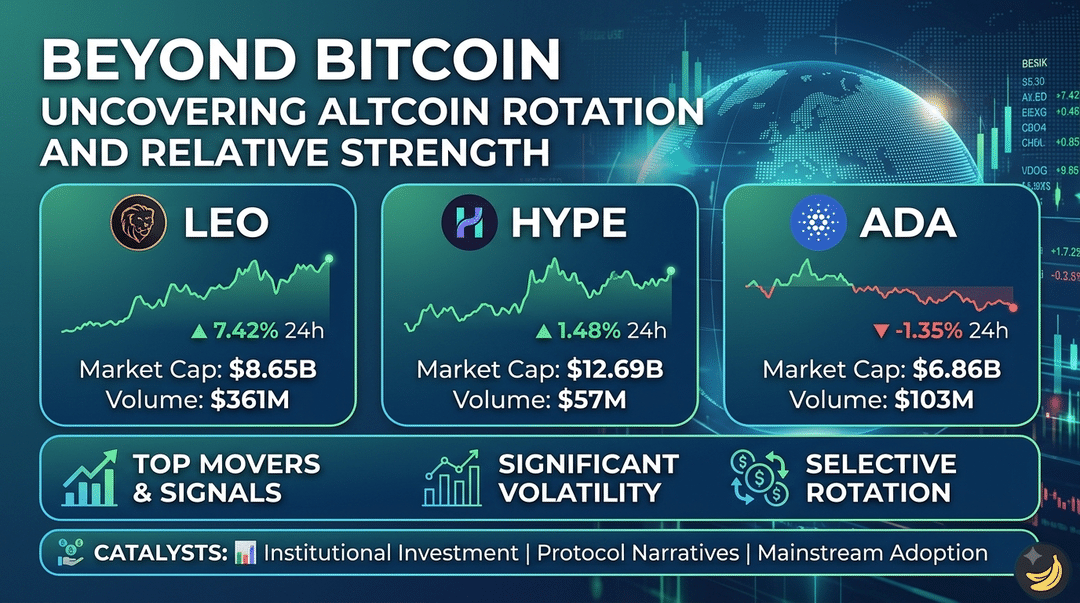
With a market capitalization approaching $10 billion and trading volumes that have occasionally surpassed industry giants like Coinbase, Hyperliquid’s success is a masterclass in specialized infrastructure and user-centric tokenomics.
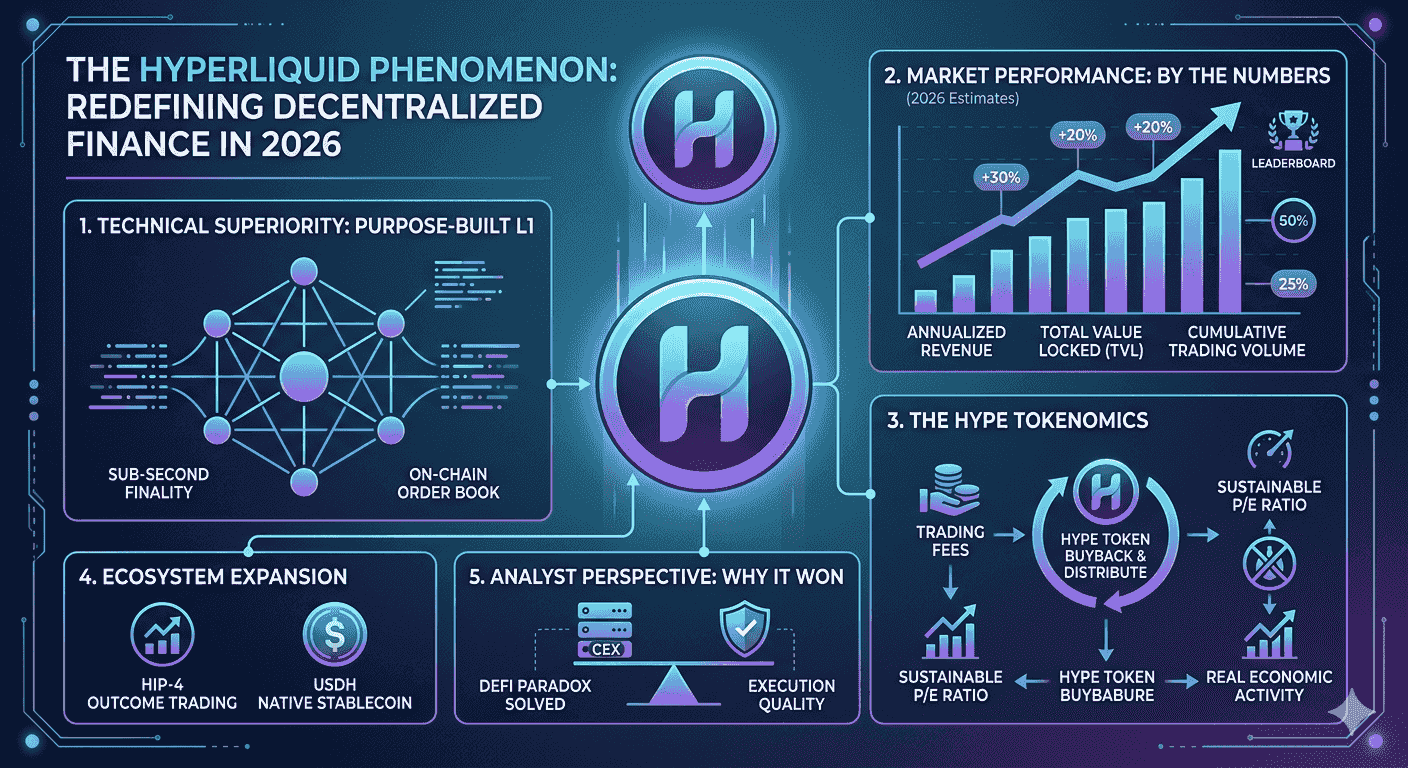
1. Technical Superiority: The Power of a Purpose-Built L1
The cornerstone of Hyperliquid’s dominance is its architectural choice: a custom-built Layer-1 blockchain optimized specifically for trading. Unlike general-purpose chains (like Ethereum) that suffer from congestion, or modular solutions that introduce latency, Hyperliquid uses the HyperBFT consensus algorithm.
This technical foundation allows for:
- Sub-second Finality: Transactions settle in less than one second, matching the "feel" of a CEX like Binance.
- On-Chain Order Book: Every bid, ask, and cancellation is transparently recorded on-chain, eliminating the "black box" risks associated with centralized order matching.
- High Throughput: Capable of handling up to 100,000 orders per second, providing the liquidity depth required by institutional high-frequency traders.
2. Market Performance: By the Numbers
Hyperliquid’s growth in 2025 and 2026 has been nothing short of vertical. According to recent market data, the protocol generated over $54 million in fees in a single 30-day period during early 2026—outperforming nearly every other DeFi protocol in pure revenue generation.
| Metric (2026 Estimates) | Performance Value | Significance |
|---|---|---|
| Annualized Revenue | ~$600M - $1.4B | Competes with Tier-1 CEXs |
| Total Value Locked (TVL) | ~$4.5B+ | Indicates deep liquidity and trust |
| Cumulative Trading Volume | ~$2.9 Trillion | Surpassed major retail platforms |
This success proves a critical analyst thesis: Revenue is the new TVL. While older DeFi projects focused on locking capital, Hyperliquid focuses on using capital, creating a high-velocity economy that rewards active participants.
3. The HYPE Tokenomics: Value Accrual, Not Inflation
Most DEX tokens suffer from "farm-and-dump" dynamics, where high emissions crush the token price. Hyperliquid flipped this script with the HYPE token.
HYPE’s value is driven by Direct Revenue Capture. Unlike inflationary models, Hyperliquid utilizes a fee-buyback mechanism. A significant portion of the protocol's trading fees is used to buy back HYPE from the market or distribute it as "digital dividends" to stakers. This creates a sustainable "P/E ratio" (Price-to-Earnings) valuation, attracting traditional-style investors who look for yield backed by real economic activity.
4. Expanding the Ecosystem: HIP-4 and USDH
Hyperliquid is no longer "just a DEX." The introduction of HIP-4 (Outcome Trading) and the native stablecoin USDH has transformed it into a full-scale financial ecosystem.
- Outcome Markets: Traders can now hedge against or speculate on real-world events (prediction markets) using the same high-speed order book.
- USDH Integration: By having a native, Hyperliquid-aligned stablecoin, the protocol reduces reliance on external bridges and centralized issuers, keeping 100% of the value within its own L1 borders.
5. Analyst Perspective: Why It Won
If we strip away the technical jargon, Hyperliquid won because it solved the DeFi Paradox: it offered the security of self-custody with the execution quality of a CEX.
For years, traders chose CEXs for speed and DEXs for safety. Hyperliquid bridged this gap. It cultivated a "sticky" community through transparency (evidenced by its famous leaderboard) and a product that simply works better than its competitors like dYdX or GMX in terms of latency and fee structure.
Risks to Consider
As a professional analyst, one must note the remaining hurdles:
- Validator Centralization: As a high-performance L1, maintaining decentralization while scaling remains a technical challenge.
- Regulatory Scrutiny: As decentralized perps grow to handle trillions, global regulators may increase pressure on "unhosted" order books.
Conclusion: The "Binance Killer" Thesis?
While it is premature to say Hyperliquid will "kill" centralized exchanges, it has undeniably ended their monopoly on high-performance trading. Hyperliquid (HYPE) represents a shift from "DeFi as an experiment" to "DeFi as a professional infrastructure." For investors, HYPE is no longer a speculative "moonshot" but a foundational asset in a modern crypto portfolio, valued for its massive revenue-generating engine and its role as the primary settlement layer for the future of on-chain derivatives. Hyperliquid, HYPE, DeFi2026, CryptoAnalysis, DEXDominance