The Core Narrative
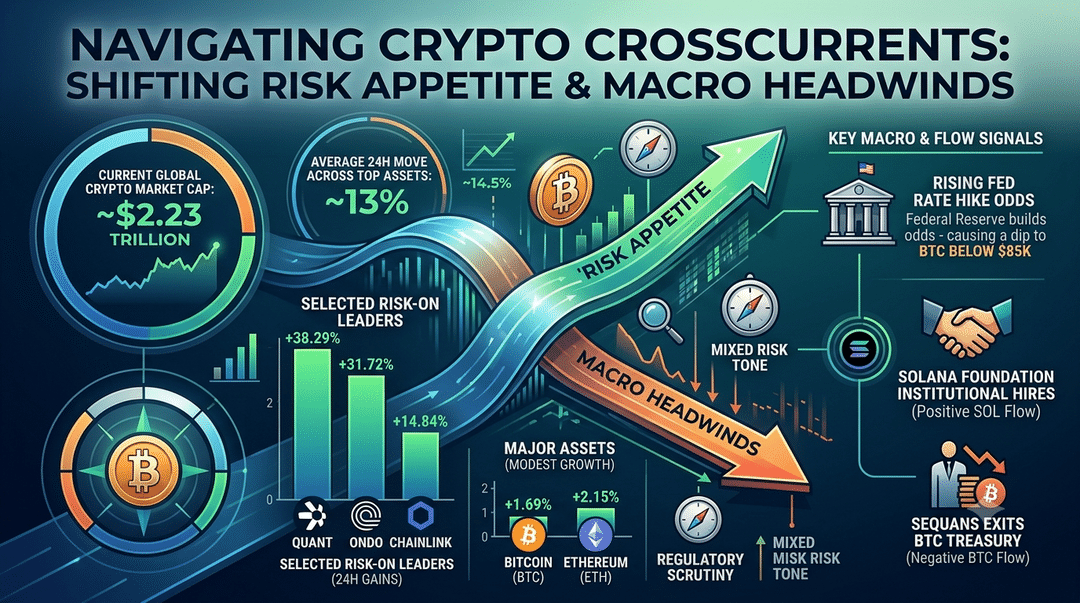
The current crypto market narrative is largely defined by a pivotal interplay between accelerating institutional integration, evolving market structures, and persistent, critical security challenges. This confluence of forces paints a picture of an industry striving for maturity while still navigating inherent complexities and risks.
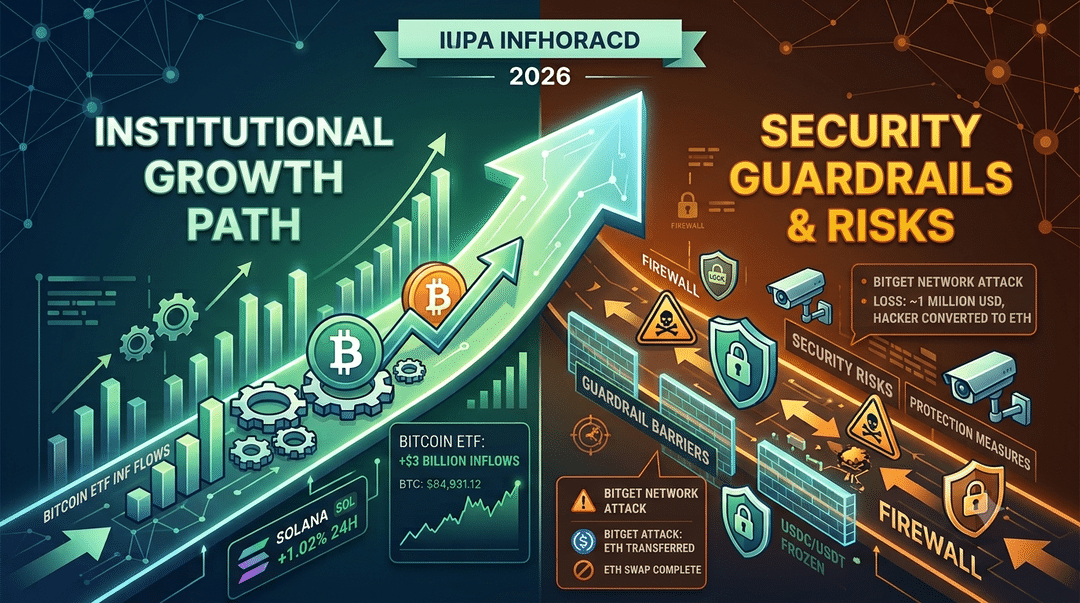
On one hand, the drive for institutional adoption is a dominant theme. Bitcoin Exchange-Traded Funds (ETFs) have demonstrated significant momentum, notching a seven-day winning streak and drawing nearly $3 billion in inflows, pushing their 2026 flows back into positive territory. This sustained interest from traditional finance signals a deepening acceptance and legitimization of Bitcoin as an investable asset. Parallel to this, the Solana Foundation has made a strategic move, hiring Binance's former Global CMO for an institutional push, indicating a concerted effort by prominent Layer 1 ecosystems to attract and cater to larger, more traditional entities. These developments collectively underscore a market actively building bridges to institutional capital, demanding more robust and compliant financial products.
This institutional embrace inherently shifts focus towards market structure. The recent $15.6 billion Bitcoin options expiry event, for instance, highlighted the impact of derivatives markets on price action, with Bitcoin's rally slowing in its wake. Such events are characteristic of a maturing market, where complex financial instruments play an increasingly significant role in price discovery and volatility management. The observation that IBIT options trading is calmer post-Bitcoin's rebound further suggests a market learning to price in these structural elements more efficiently.
However, alongside this maturation, security remains a critical, and at times, unsettling counter-narrative. The recent Bitget hack, where attackers managed to siphon funds, prompted Circle and Tether to freeze approximately $318,000 in USDC and USDT. While a response was swift, the attacker had already swapped most funds into unfreezable ETH, underscoring the inherent challenges in asset recovery within a decentralized landscape. This incident serves as a stark reminder that even as market infrastructure evolves, vulnerabilities persist. Furthermore, the tragic news of former Hack VC partner Hsin-Ju Chuang’s death, categorized under security relevance, adds a somber note, reminding the industry of the human element and the broader need for stability and trust, even if indirectly related to market security protocols.
In essence, the market is simultaneously celebrating the influx of institutional capital and the sophistication it brings, while also being forced to confront the enduring security risks and structural nuances that define the crypto space. This dual dynamic of growth and the need for guardrails forms the most concentrated storyline in the current market.
Which Coins Or Segments Are Most Exposed
The coins and segments most exposed to this narrative are primarily those directly impacted by institutional flows, those actively pursuing institutional adoption, and those whose market structure is becoming increasingly complex or vulnerable to security incidents.
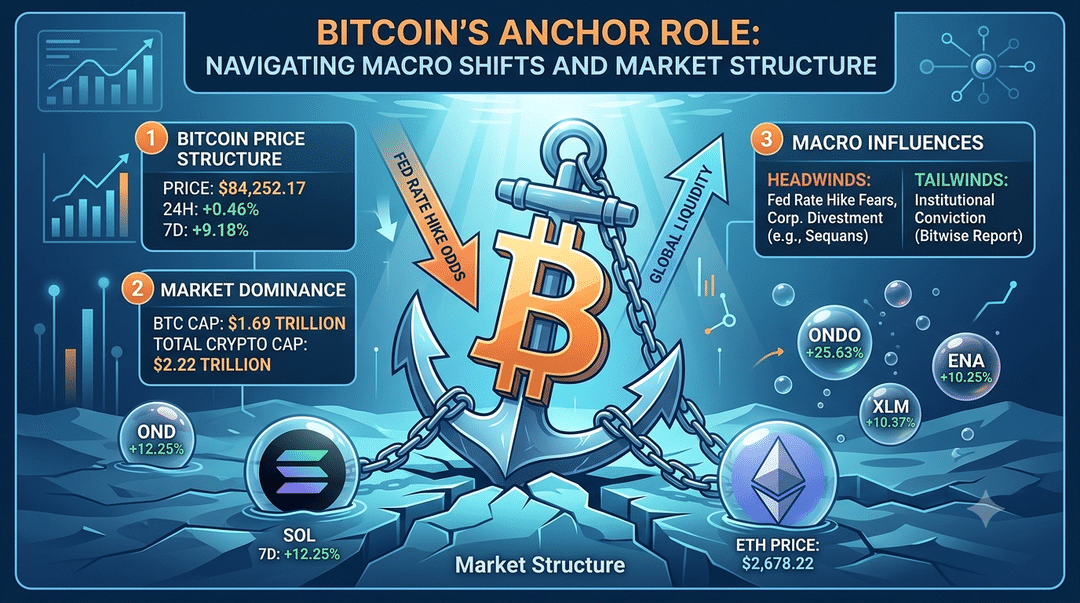
Bitcoin (BTC) stands at the forefront. Its direct exposure stems from the positive flows into Bitcoin ETFs, which act as a primary conduit for institutional capital. The recent slowing of its rally around the $15.6 billion options expiry also highlights its sensitivity to market structure events, demonstrating how derivatives markets influence its short-term price dynamics.
Solana (SOL) is another key asset, explicitly positioning itself for institutional growth. The Solana Foundation's strategic hire for an institutional push directly ties its future trajectory to the success of attracting larger investors. This strategic focus makes SOL highly exposed to the positive sentiment and capital associated with institutional adoption.
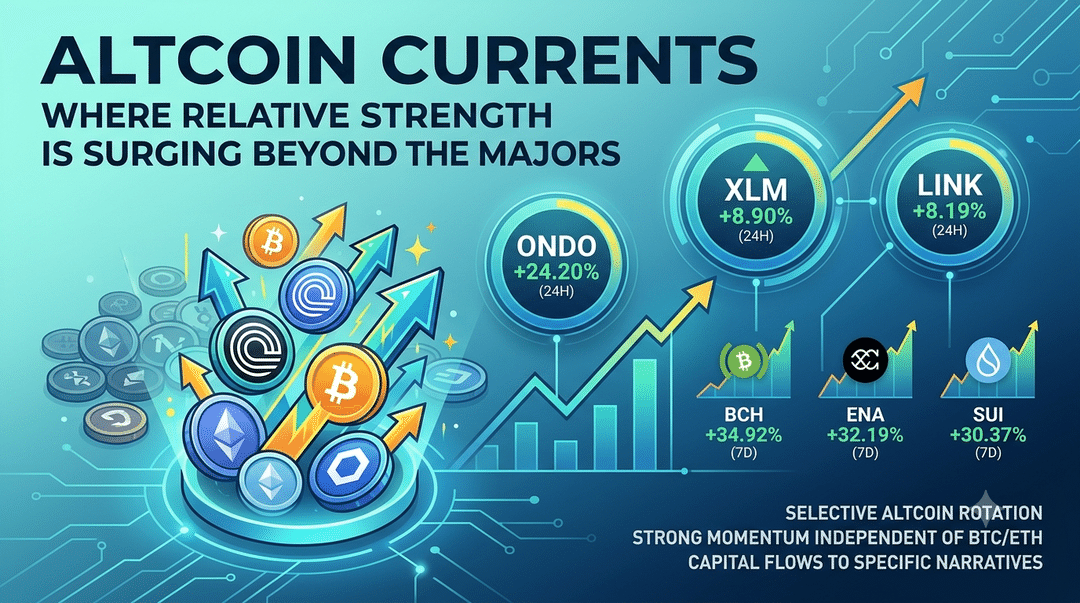
While not directly linked by specific news within this narrative, several other assets have shown significant volatility, suggesting a broader market response or project-specific developments. Quant (QNT), for instance, has experienced a remarkable 56.44% surge over 24 hours and a 153.59% increase over seven days. While this strong performance indicates considerable momentum, a direct causal link to the institutional/security narrative is not evident from the provided data. Its price action might be driven by independent factors or a general risk-on appetite in the broader market, which could be indirectly buoyed by positive institutional sentiment.
Similarly, Worldcoin (WLD), Near Protocol (NEAR), and Sui (SUI) are among the top volatile assets, with 24-hour gains of 17.8%, 7.25%, and 7.04% respectively. These assets, though not mentioned in the specific news items driving the core narrative, represent segments that can either benefit from a generally positive market sentiment fueled by institutional interest or are driven by their own project-specific catalysts. Their volatility suggests they are actively being priced by the market, potentially as higher-beta plays within an environment perceived as increasingly legitimate by institutional players.
Finally, XRP and Stellar (XLM), while not experiencing the extreme volatility of QNT, WLD, NEAR, or SUI, showed resilience. They continued climbing even as Bitcoin's rally slowed due to options expiry. This suggests that their market dynamics may be influenced by specific factors (e.g., regulatory clarity for XRP, or specific use cases for XLM) that allow them to decouple from immediate Bitcoin-centric market structure events, potentially making them attractive to institutional players seeking diversified exposure or specific utility.
The Bitget hack indirectly exposed Ethereum (ETH), as the attacker converted stolen stablecoins into ETH to evade freezing. This highlights ETH's role as a primary liquidity destination in the crypto ecosystem, even in the context of illicit activities, and underscores the interconnectedness of assets during security incidents.
How The Market Is Pricing It
The market is currently pricing in this dual narrative with a mildly positive short-term bias, as evidenced by the overall market context. The general trend suggests an optimistic outlook regarding institutional engagement, tempered by an awareness of persistent risks and market structure complexities.
Bitcoin (BTC)'s price action directly reflects the institutional and market-structure influences. Its rally, which recently slowed around the $15.6 billion options expiry, indicates that while institutional inflows (like the positive ETF streak) provide upward pressure, significant derivatives events can introduce temporary resistance or re-evaluation. The fact that IBIT options trading is now calmer after Bitcoin's rebound suggests that the market is adapting to and integrating these institutional-grade derivatives into its pricing models. Bitcoin's current price of $84,931.12, with a modest 1.02% 24-hour change and 5.5% 7-day change, shows a steady, rather than explosive, appreciation, which aligns with the gradual, structural integration of institutional capital.
Solana (SOL), trading at $124.19, with a 2.52% 24-hour gain and a 14.7% 7-day gain, appears to be pricing in its proactive institutional strategy. The news of the Solana Foundation hiring for an institutional push likely contributes to this positive sentiment, as investors anticipate future capital inflows and ecosystem growth driven by larger players. The market is interpreting these strategic moves as a bullish signal for SOL's long-term adoption.
The significant volatility observed in other assets, while not directly tied to the core institutional/security news, indicates a broader market appetite for risk. Quant (QNT), with its extraordinary 56.44% 24-hour and 153.59% 7-day surge, is a prime example. The market is aggressively pricing QNT, potentially based on project-specific developments not covered in the provided news, or as a higher-beta asset benefiting from a general uplift in crypto sentiment fueled by the overarching institutional narrative. Similarly, Worldcoin (WLD) (17.8% 24h gain), Near Protocol (NEAR) (7.25% 24h gain), and Sui (SUI) (7.04% 24h gain) are experiencing strong upward momentum. This suggests that capital is flowing across various altcoin segments, possibly driven by a "trickle-down" effect from the positive institutional narrative or by independent project news not captured in this specific brief. These assets demonstrate that while the core narrative is about institutional maturation, speculative capital remains active throughout the market.
Even in the face of security concerns, the market's pricing response is nuanced. The Bitget hack, while a negative security event, saw only a limited amount of stablecoins frozen, with the attacker successfully converting most funds to ETH. This highlights that while security incidents are a concern, their market impact can be localized, and assets like Ethereum (ETH) (0.87% 24h gain) continue to function as a primary liquidity layer, even during such events. The market, in this instance, priced the incident as a specific platform vulnerability rather than a systemic threat to the broader market.
The market is, therefore, exhibiting a selective and dynamic pricing mechanism: rewarding assets with clear institutional narratives, adapting to complex market structure events, and demonstrating continued risk appetite in altcoins, while absorbing security incidents without broad panic.
Conclusion and Risk Management
The current crypto market is undeniably shaped by the dual forces of institutional maturation and persistent security challenges. The narrative is one of an ecosystem growing in sophistication and attracting significant traditional capital, as evidenced by sustained Bitcoin ETF inflows and strategic institutional pushes by platforms like Solana. This growth brings with it evolving market structures, such as the increasing influence of options expiries, which the market is learning to price and navigate. However, the recurring theme of security vulnerabilities, highlighted by incidents like the Bitget hack, serves as a critical reminder that fundamental risks remain.
For this narrative to be confirmed, we would observe continued positive inflows into institutional investment vehicles, a further expansion of institutional-grade products and services across various blockchains, and a demonstrable improvement in the industry's collective security posture, including more effective incident response and preventative measures. Regulatory clarity that fosters institutional participation without stifling innovation would also serve as a strong confirmatory signal.
Conversely, the narrative would be weakened by a reversal of institutional interest, perhaps indicated by sustained outflows from Bitcoin ETFs or a slowdown in institutional adoption efforts by major protocols. Significant and widespread security breaches that erode investor trust, or adverse regulatory actions that deter institutional engagement, would also critically undermine this trajectory. Any signs of market structure becoming overly fragile or opaque, leading to unpredictable liquidity crises, could also shift the narrative negatively.
From a risk management perspective, investors should consider the implications of this evolving landscape. Diversification across assets with strong institutional narratives (like BTC and SOL) and those demonstrating independent momentum (like QNT, WLD, NEAR, SUI) could be a strategy, while acknowledging the differing risk profiles. It is crucial to monitor not only price action but also fundamental developments related to institutional partnerships, regulatory frameworks, and, critically, security audits and incident reports. Understanding that even in a maturing market, security vulnerabilities can lead to rapid capital movements, particularly in stablecoins and highly liquid assets like Ethereum, is paramount. Avoiding over-leveraging and maintaining a clear understanding of the underlying technology and security practices of invested assets remains essential in navigating crypto's dual path of growth and guardrails.
Source Data Reference
Market Snapshot Input
| Asset | Symbol | Price (USD) | 24h Change | Market Cap (USD) |
|---|---|---|---|---|
| Quant | QNT | 162.079527 | 56.44% | 1,956,743,663 |
| Bitcoin | BTC | 84,931.120858 | 1.02% | 1,706,275,220,726 |
| Solana | SOL | 124.189357 | 2.52% | 72,987,549,398 |
| Worldcoin | WLD | 0.575815 | 17.80% | 2,140,076,130 |
| Near Protocol | NEAR | 5.197611 | 7.25% | 6,795,625,899 |
| Sui | SUI | 1.255238 | 7.04% | 5,142,127,568 |
| XRP | XRP | 1.540201 | -0.35% | 96,846,629,678 |
| Stellar | XLM | 0.218016 | -0.31% | 7,624,063,363 |
| Ethereum | ETH | 2,713.465397 | 0.87% | 331,272,549,268 |
| BNB | BNB | 781.035231 | 0.87% | 104,002,418,675 |
Trending Headlines Input
- Circle and Tether Freeze Stablecoins Tied to Bitget Hack—But Most Funds Slip Away
- Former Hack VC partner Hsin-Ju Chuang’s death ruled a suicide
- Bitcoin Rally Slows as $15.6 Billion Options Expiry Hits—XRP and Solana Keep Climbing
- Solana Foundation Hires Binance's Former Global CMO for Institutional Push
- Bitcoin ETFs Notch Seven-Day Winning Streak as 2026 Flows Turn Green
- Bitcoin Breakout Cools as Fed Rate-Hike Bets Climb
- Defense Secretary Pete Hegseth Holds Bitcoin in a Coinbase Wallet, Filing Shows
- Kalshi loses appeal, setting up potential Supreme Court case
- IBIT options price trading more calmly after Bitcoin rebound
- Researchers propose Zcash-style private Bitcoin transfers without a soft fork