Bitcoin Price Structure
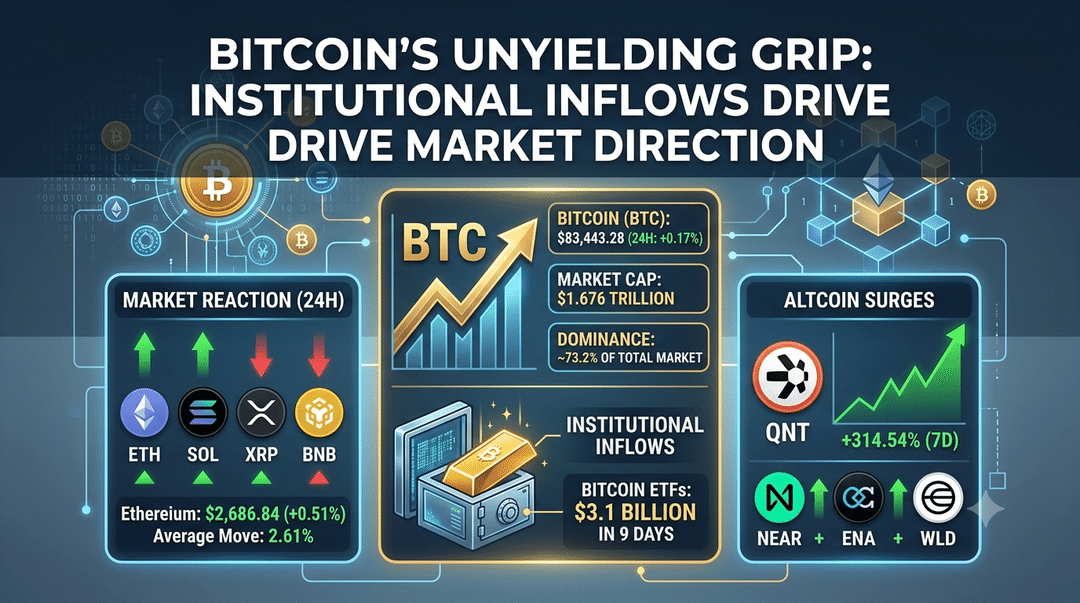
Bitcoin, the largest cryptocurrency by market capitalization, is presently trading at approximately $77,392.04. Over the past 24 hours, BTC has registered a modest decline of -0.75%. Looking at the weekly performance, Bitcoin has experienced a more significant dip of -5.06%. This movement contrasts with the overall global market capitalization, which stands at $2.04 trillion, with Bitcoin commanding a substantial portion of this total at $1.55 trillion.
When observing its immediate peers, Ethereum (ETH), the second-largest asset, is priced around $2,129.55, showing a similar 24-hour decline of -0.67% and a steeper 7-day loss of -7.05%. This suggests that while both major assets are experiencing downward pressure over the past week, Bitcoin's 24-hour performance has been marginally more resilient compared to Ethereum. The relative stability of Bitcoin's 24-hour movement, despite its multi-day pullback, highlights its considerable influence on the broader market's short-term direction. The sheer scale of Bitcoin's market capitalization means that even minor percentage shifts can have a ripple effect across the entire crypto landscape.
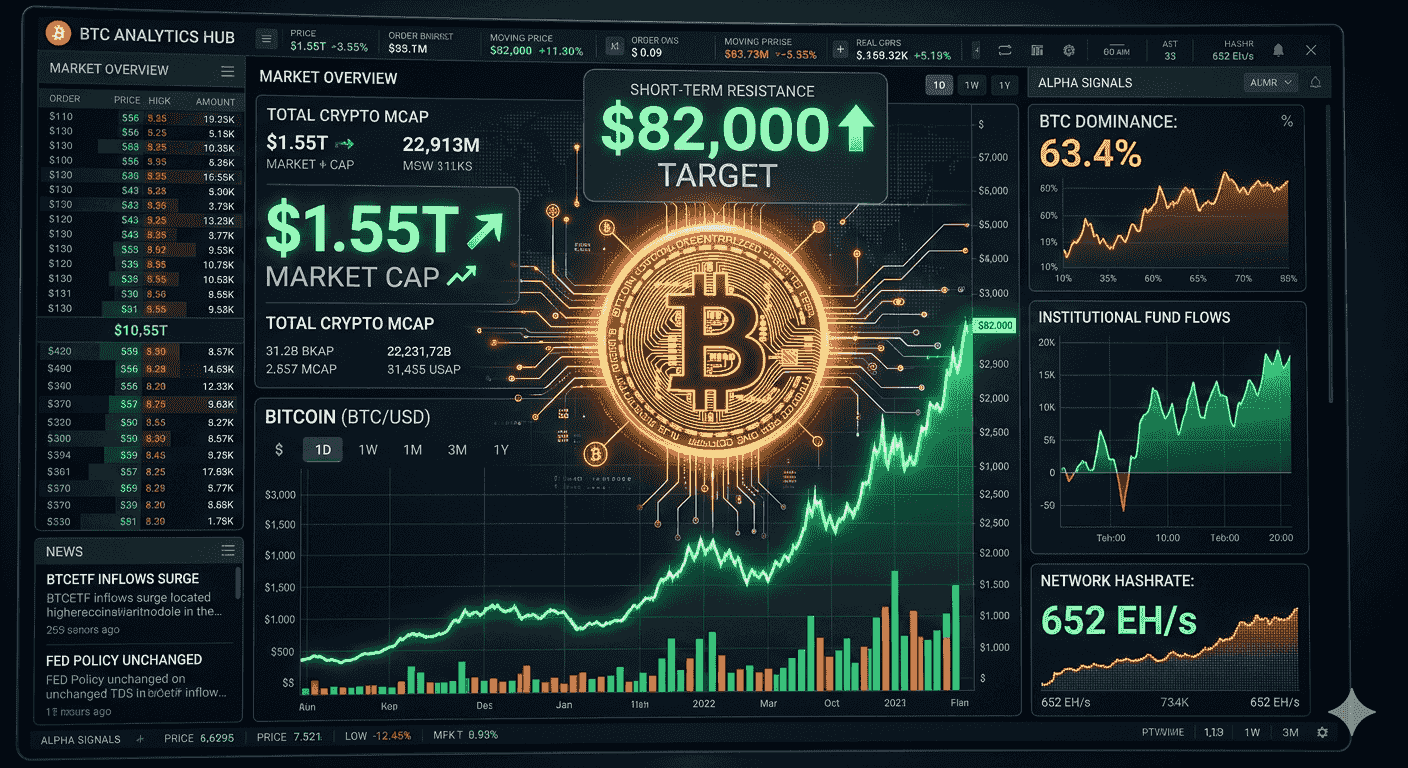
Market positioning data indicates a nuanced picture for Bitcoin. Despite recent price dips and prevailing macroeconomic concerns in the U.S., there has been an observable increase in Bitcoin long positions, with some analysts even speculating on a potential rally towards $82,000. This suggests that a segment of the market may be interpreting current conditions as a buying opportunity or anticipating a positive catalyst, potentially leading to a decoupling of Bitcoin's immediate price action from broader economic indicators.
Why Bitcoin Is Driving The Tape
Bitcoin's market influence stems from a combination of regulatory developments, institutional interest, and its unique position as a macro-sensitive asset. Recent headlines underscore these factors, painting a mixed but predominantly forward-looking picture for the leading cryptocurrency.
On the regulatory front, Bitcoin has faced scrutiny, exemplified by the lawsuit against Bitcoin ATM firm CoinFlip. Missouri's top prosecutor has accused the operator of "knowingly facilitating fraudulent transactions," a development that casts a shadow of ongoing regulatory challenges and the need for clearer operational guidelines within the crypto space. Such incidents highlight the regulatory hurdles that Bitcoin-linked services continue to navigate, impacting public perception and operational frameworks.
However, a potentially significant institutional catalyst has emerged with the proposed American Reserve Modernization Act (ARMA Bill). This legislative initiative aims to direct the U.S. Treasury to establish and maintain a strategic Bitcoin reserve for a minimum of 20 years. If enacted, this bill could enshrine Bitcoin into federal law as a strategic asset, signaling a profound shift in institutional acceptance and potentially opening doors for broader government and corporate adoption. This kind of long-term strategic integration could provide a robust demand floor and legitimacy for Bitcoin, far outweighing localized regulatory disputes.
In contrast to Bitcoin's evolving institutional narrative, Ethereum has recently seen a notable institutional withdrawal. Harvard University’s endowment fund reportedly liquidated its entire ETH position after just one quarter. This move, while specific to Ethereum, underscores the selective nature of institutional engagement in the crypto market and implicitly highlights the relative strength of Bitcoin's institutional narrative, which is currently leaning towards potential long-term strategic integration rather than divestment.
Furthermore, the observation that "Bitcoin longs soar despite weak US macroeconomic data" suggests a growing conviction among some traders that Bitcoin may serve as a hedge or an independent asset class, capable of performing even when traditional economic indicators falter. This narrative, if it gains traction, could strengthen Bitcoin's position as a 'safe haven' or 'digital gold' asset, further entrenching its role as a market leader whose movements are increasingly independent of, or even inversely correlated to, traditional financial markets.
How The Rest Of The Market Is Responding
The broader cryptocurrency market is exhibiting a varied response to Bitcoin’s lead, with some assets mirroring its movements while others show signs of decoupling based on individual momentum or specific news. The global market cap's average 24-hour move of approximately 1.16% indicates a mildly positive short-term bias across the selected asset basket, even as Bitcoin and Ethereum registered slight declines. This suggests a rotation of capital or isolated strength in certain altcoins.
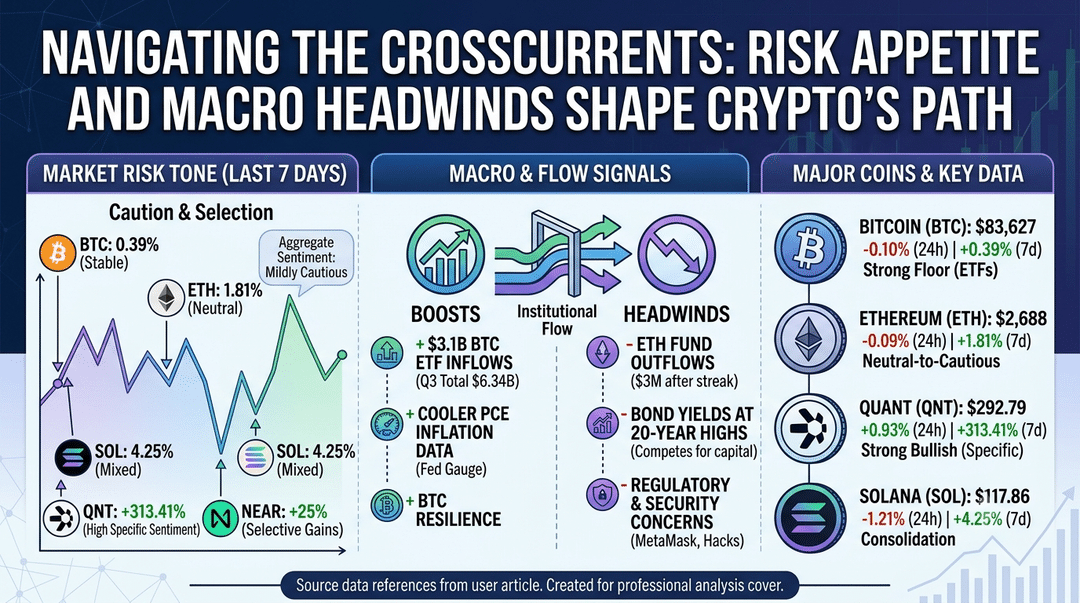
Among the major altcoins, Ethereum (ETH) has largely tracked Bitcoin's subtle 24-hour dip, declining by -0.67%. Its 7-day performance, however, is weaker at -7.05%, suggesting it may be lagging Bitcoin in terms of relative strength over the past week. Binance Coin (BNB) showed slight resilience with a 0.62% gain over 24 hours but is down -3.89% over seven days. XRP also followed a similar trend, declining -0.65% in 24 hours and a more significant -8.55% over the week. These movements generally confirm Bitcoin's influence, with most large-cap altcoins either moving in tandem or showing greater sensitivity to selling pressure over longer timeframes.
However, some assets are demonstrating significant independent momentum. The strongest 24-hour moves are concentrated in Near Protocol (NEAR), Hyperliquid (HYPE), and Zcash (ZEC). NEAR has surged by an impressive 10.78% in 24 hours and 22.90% over seven days, indicating strong bullish sentiment. Hyperliquid (HYPE) has also seen substantial gains, up 2.64% in 24 hours and an outstanding 28.20% over the week. News reports indicate that HYPE has decoupled from Bitcoin, surging 101% year-to-date due to its platform's exploding revenue across multiple sectors. Zcash (ZEC) presents a mixed picture, with a -2.50% dip in 24 hours but a robust 18.40% gain over the past seven days.
These significant movements in select altcoins indicate that while Bitcoin sets the overarching market tone, specific assets with strong fundamentals, unique narratives, or significant protocol growth can carve out independent trajectories. This dynamic highlights a market that is not entirely monolithic, allowing for pockets of strong performance even amidst broader consolidation or slight downward pressure from the leading assets.
Conclusion and Risk Management
Bitcoin continues to exert a dominant influence over the cryptocurrency market. Its price structure, characterized by recent slight dips but underpinned by persistent bullish long positioning and significant institutional catalysts, largely dictates the prevailing sentiment. The potential for the ARMA Bill to enshrine a strategic Bitcoin reserve into law represents a foundational shift that could bolster Bitcoin's long-term value proposition and institutional acceptance, potentially offsetting localized regulatory friction such as the CoinFlip lawsuit.
While the broader market, particularly major altcoins like Ethereum and XRP, tends to confirm Bitcoin's short-term movements or lag its performance over longer periods, the market is not without its independent movers. Assets like NEAR and HYPE demonstrate that strong project-specific developments can lead to significant decoupling and outperformance. This creates a nuanced market environment where Bitcoin's macro narrative provides the overarching framework, while specific altcoin stories drive localized volatility and returns.
For participants, managing risk in this environment involves a dual approach. Monitoring Bitcoin's price action, its technical levels, and key macro indicators remains crucial, as its movements will likely continue to anchor the market. Simultaneously, paying close attention to developments in regulatory frameworks and institutional adoption, particularly concerning Bitcoin, is essential for understanding long-term market direction. While a "mildly positive short-term bias" is observed across the broader asset basket, this is largely driven by specific altcoin rallies that may not be sustainable without Bitcoin's stable foundation. Investors should be prepared for continued volatility, especially in altcoins, and consider the potential for rapid shifts in sentiment based on both Bitcoin-specific news and broader economic data. Diversification and a clear understanding of individual asset catalysts are prudent strategies in a market still heavily influenced by the king of crypto.
Source Data Reference
Market Snapshot Input
| Asset | Symbol | Price (USD) | 24h Change | Market Cap (USD) |
|---|---|---|---|---|
| Bitcoin | BTC | 77,392.042834 | -0.75% | 1,550,361,902,484 |
| Hyperliquid | HYPE | 58.196816 | 2.64% | 19,433,556,944 |
| Ethereum | ETH | 2,129.553162 | -0.67% | 256,454,242,054 |
| Near Protocol | NEAR | 1.931652 | 10.78% | 2,289,327,038 |
| Chainlink | LINK | 9.732554 | 0.32% | 6,100,850,967 |
| Zcash | ZEC | 662.469039 | -2.50% | 10,816,972,675 |
| XRP | XRP | 1.368512 | -0.65% | 84,613,805,222 |
| Bitcoin Cash | BCH | 379.87044 | 1.03% | 7,546,425,249 |
| Dogecoin | DOGE | 0.105319 | 0.76% | 15,708,039,055 |
| BNB | BNB | 657.168685 | 0.62% | 91,467,656,764 |
Trending Headlines Input
- Bitcoin ATM Firm CoinFlip Blasts 'Meritless' Lawsuit as Missouri Demands Restitution for Seniors
- HYPE Surges 101% This Year: What’s Driving Hyperliquid’s Growth?
- Proposed ARMA Bill Aims to Enshrine Strategic Bitcoin Reserve Into Law
- Harvard dumps entire ETH position after just one quarter
- Bitcoin longs soar despite weak US macroeconomic data: Is $82K BTC next?
- Crypto PAC backed by Anchorage and Chainlink announces endorsements for 2026 midterms