Bitcoin Price Structure
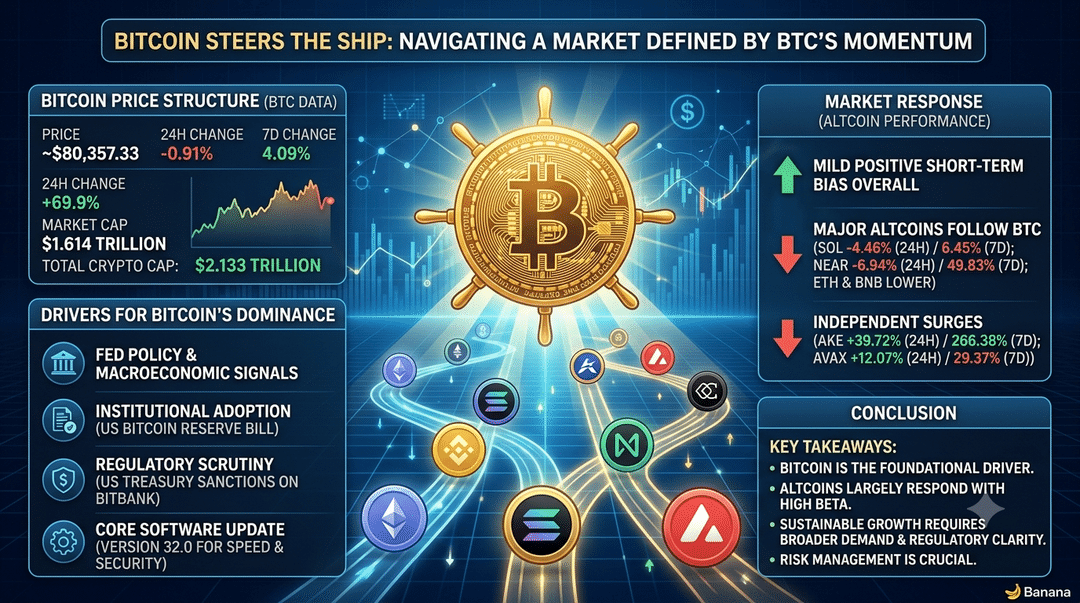
Bitcoin (BTC) currently trades at approximately $81,618, having posted a modest 24-hour gain of 0.14%. This slight positive movement stands in contrast to the broader market, which has seen an average 24-hour decline of 0.68% across a snapshot of major assets. Over the past seven days, Bitcoin has appreciated by 1.73%, indicating a sustained upward trend despite short-term fluctuations.
With a commanding market capitalization of over $1.63 trillion, Bitcoin remains the undisputed leader, accounting for a significant portion of the total global crypto market cap of $2.18 trillion. Its 24-hour trading volume stands at $25.06 billion, reflecting consistent liquidity and active trading interest. The price structure observed suggests that BTC has maintained crucial support levels, notably around the $80,000 mark mentioned in recent market analysis. This relative stability and slight upward bias, especially when juxtaposed against the mild negative trend of the wider market, underscore Bitcoin's current role as a fundamental anchor for digital asset valuations. The ability of Bitcoin to either hold its ground or advance slightly while many other assets retrace highlights its comparative strength and potentially a flight to quality within the crypto ecosystem.
Why Bitcoin Is Driving The Tape
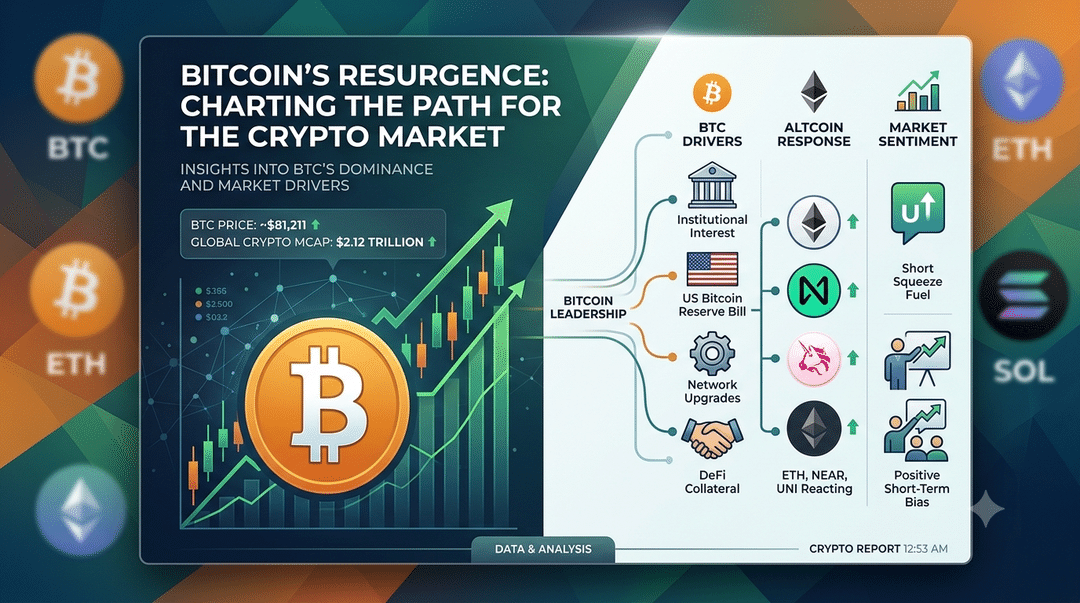
The current market dynamic, where Bitcoin exhibits relative strength, appears to be heavily influenced by a confluence of institutional and macro-level factors. Recent news signals indicate a renewed focus on mainstream adoption and regulatory clarity, predominantly benefiting Bitcoin.
One significant driver is the observable increase in institutional capital flowing into digital asset funds. Reports indicate that crypto funds have attracted $858 million in inflows, marking a six-week high. This surge is partly attributed to optimism surrounding legislative developments, such as a potential Senate stablecoin deal, which is perceived to enhance regulatory clarity. Such developments typically bolster institutional confidence, and Bitcoin, as the most liquid and recognized digital asset, is often the primary recipient of this institutional interest. The implication is that as more traditional finance players seek exposure to crypto, BTC serves as the default entry point, thereby strengthening its price structure and market dominance.
Furthermore, broader macroeconomic and geopolitical narratives continue to intersect with Bitcoin's performance. Recent commentary from political figures on international relations, such as former President Trump's remarks on an Iran peace proposal, coincided with a 2.3% rally in Bitcoin. While direct causation is always complex to pinpoint, such events can trigger risk-off sentiment in traditional markets, sometimes leading investors to consider alternative assets like Bitcoin as a hedge or store of value. This responsiveness to global events underscores Bitcoin's evolving role beyond a purely technological asset, linking it more closely to global macro trends.
Market analysts have also noted Bitcoin's ability to hold above the $80,000 level despite instances of flash volatility and liquidity grabs. This resilience is interpreted by some as a sign of underlying strength and accumulating conviction, with a potential price target of $85,000 being discussed. These observations, combined with the sustained institutional interest and macro linkages, suggest that Bitcoin's trajectory is not merely a reflection of internal crypto market dynamics but is increasingly shaped by external financial and political forces, positioning it as the primary market mover.
How The Rest Of The Market Is Responding
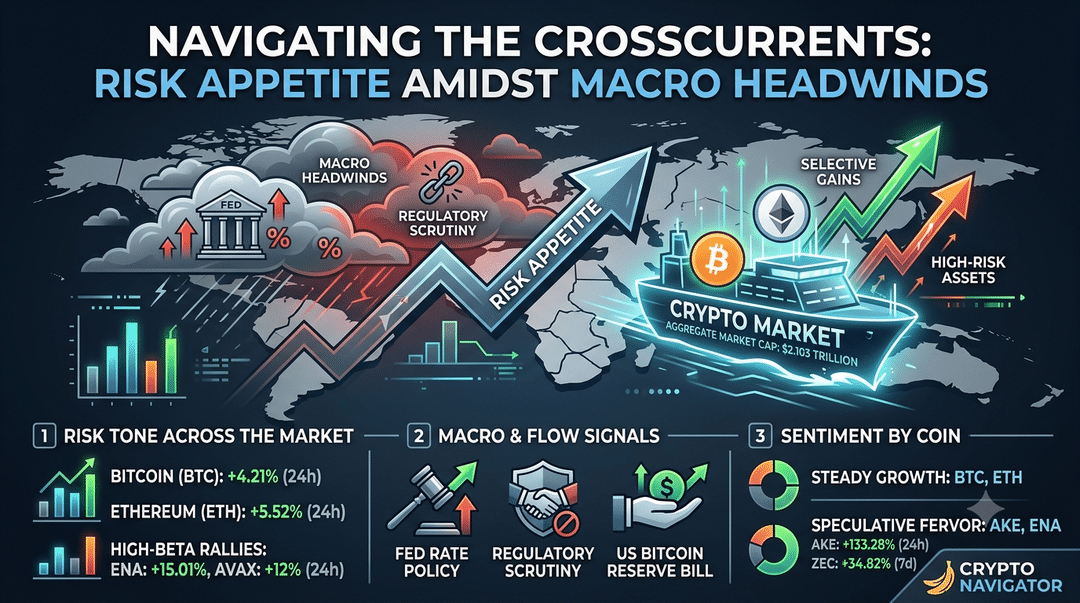
While Bitcoin demonstrates a degree of independent strength, the broader cryptocurrency market currently exhibits a mildly negative short-term bias. The average 24-hour movement across the selected asset basket is -0.68%, contrasting with Bitcoin's slight positive gain. This divergence suggests that while institutional flows are favoring BTC, the capital is not uniformly distributed across all digital assets, leading to varied responses from altcoins.
Among the priority assets, XRP has shown positive momentum, with a 24-hour increase of 1.19% and a 7-day gain of 5.79%. This performance is potentially linked to news of Ripple securing a $200 million credit facility to expand its institutional prime brokerage. This development suggests that specific altcoins with strong institutional or regulatory-related news can carve out independent positive movements, even within a largely sideways or slightly negative market.
In contrast, other priority assets like Zcash (ZEC) experienced a 24-hour decline of 4.69%, despite a significant 31.05% gain over the past seven days. This indicates that some altcoins, after strong weekly runs, are undergoing consolidation or profit-taking, contributing to the overall negative average. Toncoin (TON), another priority asset, has seen a 0.28% increase over 24 hours, alongside an impressive 39.90% rise over seven days, showcasing strong individual momentum not directly tied to immediate Bitcoin price action.
Looking at other major cryptocurrencies, Ethereum (ETH) registered a 0.85% decline over 24 hours and a 1% drop over seven days. This occurred even as news emerged about Galaxy and Sharplink planning a $125 million institutional DeFi yield fund backed by ETH treasury, highlighting that positive institutional news for an altcoin does not always immediately translate into positive price action, especially if broader market sentiment is cautious. Solana (SOL) and BNB, however, showed strength with 24-hour gains of 1.49% and 1.56% respectively, indicating selective positive performance among large-cap altcoins.
The derived insights confirm that the strongest 24-hour moves are concentrated in ZEC (-4.69%), Sui (SUI) (-2.71%), and Ondo (ONDO) (-1.87%). These assets, representing some of the top volatile movers, are largely experiencing downward pressure, reinforcing the observation that the market outside of Bitcoin is grappling with consolidation. This mixed altcoin performance, with some showing resilience or independent gains while others experience significant pullbacks, underscores Bitcoin's central role in setting the primary market tone.
Conclusion and Risk Management
Bitcoin's current market posture is one of leadership and relative stability. Its ability to maintain price levels and even post modest gains while the broader market experiences a mild downturn underscores its foundational role. The primary catalysts driving this performance appear to be increasing institutional interest, evidenced by substantial fund inflows and positive regulatory developments, along with its perceived role as a macro-hedge. These factors collectively contribute to a robust price structure for BTC, with key support around $80,000 holding firm.
The rest of the market, while showing a general short-term negative bias, is not monolithic. Selected altcoins like XRP and TON have demonstrated independent strength, often propelled by specific project-related news or strong underlying momentum. Conversely, assets like ZEC and SUI, despite strong weekly performances, are facing 24-hour pullbacks, contributing to the overall negative average. Ethereum, despite institutional interest in its ecosystem, has also seen a slight decline, indicating that even positive news for altcoins may not immediately override broader market caution or profit-taking pressures.
Looking ahead, a key scenario involves Bitcoin continuing to consolidate or push higher, potentially drawing more capital into the broader crypto space. However, if Bitcoin were to face significant downward pressure, it is highly probable that the rest of the market would follow, likely amplifying any negative movements.
For participants, risk management remains paramount. The observed divergence between Bitcoin's relative strength and the broader market's mild negativity suggests that capital is becoming more discerning. Monitoring Bitcoin's price structure, particularly its ability to hold critical support levels, will be crucial. Furthermore, understanding the specific catalysts driving individual altcoin performance, rather than assuming a uniform market trend, is essential. The market's short-term bias remains mildly negative, implying that caution and selective exposure, particularly in assets with clear fundamental drivers or sustained institutional backing, could be prudent. Investors should remain vigilant to both macro-economic shifts and regulatory developments, as these continue to exert significant influence on Bitcoin and, by extension, the entire crypto ecosystem.
Source Data Reference
Market Snapshot Input
| Asset | Symbol | Price (USD) | 24h Change | Market Cap (USD) |
|---|---|---|---|---|
| Bitcoin | BTC | 81,618.205026 | 0.14% | 1,634,662,142,709 |
| XRP | XRP | 1.478107 | 1.19% | 91,341,420,394 |
| Zcash | ZEC | 558.155397 | -4.69% | 9,113,711,469 |
| Toncoin | TON | 2.449322 | 0.28% | 6,575,311,390 |
| Ethereum | ETH | 2,336.642861 | -0.85% | 281,393,291,540 |
| Sui | SUI | 1.288364 | -2.71% | 5,160,437,957 |
| Ondo | ONDO | 0.4318 | -1.87% | 1,364,102,346 |
| Internet Computer | ICP | 3.308034 | -1.38% | 1,826,292,734 |
| Solana | SOL | 97.298363 | 1.49% | 56,226,855,137 |
| BNB | BNB | 668.312662 | 1.56% | 93,018,724,950 |
Trending Headlines Input
- Ripple receives $200M credit line to expand institutional prime brokerage
- Crypto Funds Add $858M as Clarity Act Drives Market Optimism
- Galaxy, Sharplink plan $125M institutional DeFi yield fund backed by ETH treasury
- Ripple Lands $200 Million Financing Facility to Expand Institutional Crypto Brokerage
- Bitcoin rallies 2.3% after Trump calls Iran peace proposal ‘totally unacceptable’
- BTC price target becomes $85K next: Five things to know in Bitcoin this week