Bitcoin Price Structure
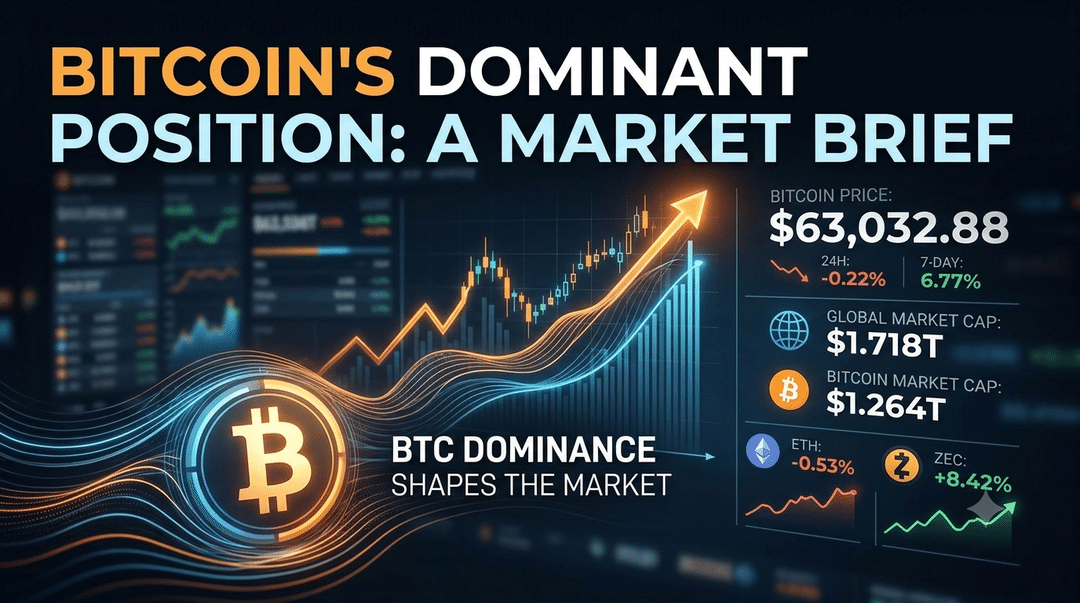
Bitcoin (BTC) has recently demonstrated resilience, trading at approximately $78,654.96. Over the last 24 hours, BTC has seen a gain of about 1.42%, building on a more substantial 5.78% increase over the past seven days. This performance positions Bitcoin as a steady, if not explosively volatile, asset within the current market cycle. Its market capitalization stands impressively at over $1.57 trillion, underscoring its dominant position as the largest digital asset by a significant margin.
Compared to the broader market average 24-hour move of approximately 1.92%, Bitcoin's recent 1.42% increase indicates it is moving positively but slightly below the average percentage gain observed across a selection of assets. Despite this, its sheer market weight means that its movements exert a disproportionate influence on the overall crypto landscape. The price has been observed to be stalling around the $78,000 mark at times, suggesting this level is an area of contention between buyers and sellers, as noted in recent market analysis. The consistent upward trajectory over the past week, however, suggests underlying demand.
Why Bitcoin Is Driving The Tape
Bitcoin's current market leadership is not merely a function of its size but is deeply intertwined with a series of significant catalysts, primarily emanating from institutional engagement, regulatory discourse, and macro-economic factors. These elements collectively reinforce Bitcoin's role as the primary driver of market narratives and investor attention.
A key factor contributing to Bitcoin's momentum is the continued and vocal interest from institutional players. Michael Saylor's MicroStrategy, a prominent corporate holder of Bitcoin, has again hinted at impending BTC purchases. This ongoing strategy from a major institutional entity signals sustained confidence in Bitcoin as a treasury asset and a long-term store of value. The fact that MicroStrategy's existing Bitcoin holdings are reported to be profitable, having gained approximately 3.3% amid Bitcoin’s rally to around $78,000, further validates this institutional investment thesis.
Adding to the institutional perspective, analysts from VanEck, a significant ETF provider, have identified potential for further gains. Their analysis points to a recovery in Bitcoin's hash rate and persistent negative funding rates as indicators of underlying network health and a bullish market structure. Such insights from traditional finance players underscore the growing integration of Bitcoin into mainstream investment strategies and analytical frameworks.
Regulatory developments, while often introducing uncertainty, also highlight Bitcoin's increasing relevance to global financial systems. The discussion around the US military's understanding of the Bitcoin network, though framed with skepticism by some Bitcoin advocates, indicates that governmental bodies are actively engaging with and attempting to comprehend the asset. On the other hand, legislative actions like Tennessee becoming the second US state to outlaw Bitcoin and crypto ATMs introduce a degree of regulatory friction. These varied regulatory signals underscore Bitcoin's position at the forefront of policy discussions, confirming its status as the asset most scrutinized by authorities.
Furthermore, Bitcoin's interaction with broader macro-economic trends continues to be a focal point. Recent analysis has pointed to potential headwinds from rising oil prices, which could threaten a "risk-asset squeeze." Bitcoin's price being observed as "stalled" at $78,000 in this context demonstrates its sensitivity to global economic indicators and its evolving role within the wider financial ecosystem, moving beyond purely crypto-native factors. These macro considerations, coupled with institutional and regulatory narratives, firmly establish Bitcoin as the primary asset dictating market direction.
How The Rest Of The Market Is Responding
While Bitcoin sets the overarching tone, the rest of the cryptocurrency market exhibits a varied response, with some assets confirming BTC's lead and others displaying independent, albeit often smaller, movements. The derived insights indicate a mildly positive short-term bias across the selected asset basket.
Ethereum (ETH), the second-largest cryptocurrency, has mirrored Bitcoin's positive trajectory, posting a 24-hour gain of approximately 2.25%. This is slightly higher than Bitcoin's 1.42% over the same period, suggesting that major cryptocurrencies are generally moving in tandem with the market leader, or even showing slightly stronger percentage gains in this specific timeframe. Wrapped Ethereum (WETH) and Lido Staked Ether (STETH), both closely linked to ETH, also registered similar gains of 2.27% and 2.30% respectively, reinforcing the positive sentiment within the Ethereum ecosystem.
Among the broader market, the strongest 24-hour moves are concentrated in specific assets. Monero (XMR) stands out with a notable 4.83% increase over 24 hours and an impressive 11.76% gain over seven days. This significant outperformance suggests that XMR may be driven by factors unique to its privacy-focused niche or specific liquidity dynamics, rather than solely following Bitcoin's lead. Hyperliquid (HYPE) also registered a solid 2.73% gain, indicating pockets of strength in certain mid-cap assets.
Other priority assets, while mostly positive, showed more moderate movements. Dogecoin (DOGE) saw a 1.37% increase, closely aligning with Bitcoin's performance. Solana (SOL) and BNB posted gains of 0.94% and 1.11% respectively, indicating a general positive drift across large-cap altcoins that are largely confirming Bitcoin’s overall market direction. Zcash (ZEC), another privacy coin, showed a relatively flat performance with a marginal -0.04% change over 24 hours, contrasting with XMR's strong move.
Overall, the market's response is characterized by a general upward trend, with major altcoins largely tracking Bitcoin's direction. While some altcoins, particularly XMR, demonstrate stronger individual percentage gains, the underlying catalysts and market sentiment remain firmly anchored to Bitcoin's price structure and fundamental developments.
Conclusion and Risk Management
The current cryptocurrency market brief clearly illustrates Bitcoin's pivotal role as the primary driver of market direction. Its price structure, supported by significant institutional interest and navigating a complex regulatory landscape, continues to be the most influential factor for the broader market. The derived insights confirm a mildly positive short-term bias, yet this optimism is tempered by ongoing macro-economic considerations and evolving regulatory scrutiny.
Looking ahead, Bitcoin's trajectory will likely remain dictated by the interplay of institutional adoption and regulatory clarity. Continued hints of corporate accumulation, such as those from MicroStrategy, alongside positive analytical endorsements from entities like VanEck, could provide a strong foundation for sustained upward momentum. Conversely, the mixed regulatory signals, from questioning by military officials to state-level bans on crypto ATMs, highlight the persistent need for the industry to adapt to and influence policy. Macroeconomic factors, particularly the performance of traditional risk assets in the face of pressures like rising oil prices, will also continue to impact Bitcoin's short-term movements.
For participants, effective risk management in this Bitcoin-led environment involves a keen focus on these central themes. Monitoring key Bitcoin price levels, such as the $78,000 mark where it has recently shown signs of stalling, is crucial for assessing short-term strength and potential support or resistance. While certain altcoins like Monero may exhibit strong independent percentage gains, these should be evaluated within the context of their specific narratives and liquidity, rather than being broadly extrapolated as indicators for the entire market. The overarching market sentiment and capital flows will continue to be heavily influenced by Bitcoin's performance and the catalysts directly impacting it. Therefore, understanding Bitcoin's foundational role and its response to institutional, regulatory, and macroeconomic forces remains paramount for navigating the crypto market effectively.
Source Data Reference
Market Snapshot Input
| Asset | Symbol | Price (USD) | 24h Change | Market Cap (USD) |
|---|---|---|---|---|
| Bitcoin | BTC | 78,654.957257 | 1.42% | 1,574,771,821,464 |
| Ethereum | ETH | 2,368.544489 | 2.25% | 285,235,087,119 |
| Monero | XMR | 391.955374 | 4.83% | 7,230,300,438 |
| Zcash | ZEC | 356.874281 | -0.04% | 5,827,139,255 |
| Dogecoin | DOGE | 0.099275 | 1.37% | 14,806,636,122 |
| Solana | SOL | 86.918719 | 0.94% | 50,052,233,184 |
| WETH | WETH | 2,368.855916 | 2.27% | 8,920,865,017 |
| Hyperliquid | HYPE | 42.44602 | 2.73% | 14,173,922,312 |
| BNB | BNB | 635.949497 | 1.11% | 88,514,275,887 |
| Lido Staked Ether | STETH | 2,362.647655 | 2.30% | 23,140,713,832 |
Trending Headlines Input
- Strategy's Michael Saylor again hints at impending BTC purchase
- Bitcoiners cast doubt on the US military's understanding of the network
- Bitcoin Hit Its Highest Price Since January—Why VanEck Analysts See More Potential Gains
- Tennessee Becomes Second State to Outlaw Bitcoin, Crypto ATMs
- Bitcoin stays 'stalled' at $78K as oil threatens new risk-asset squeeze
- Crypto Biz: Same players, bigger bets as crypto eyes a rebound