The cryptocurrency market continues to be a hotbed of innovation and price action, constantly reacting to a confluence of on-chain metrics, macroeconomic shifts, and technological advancements. Understanding these intricate dynamics is paramount for any participant seeking to navigate this high-stakes environment. This report provides an in-depth look at current market capitalization trends, spotlights the most volatile assets, and integrates recent news to offer a comprehensive perspective, culminating in crucial risk management guidance.
Global Market Capitalization: A Snapshot of Current Trends
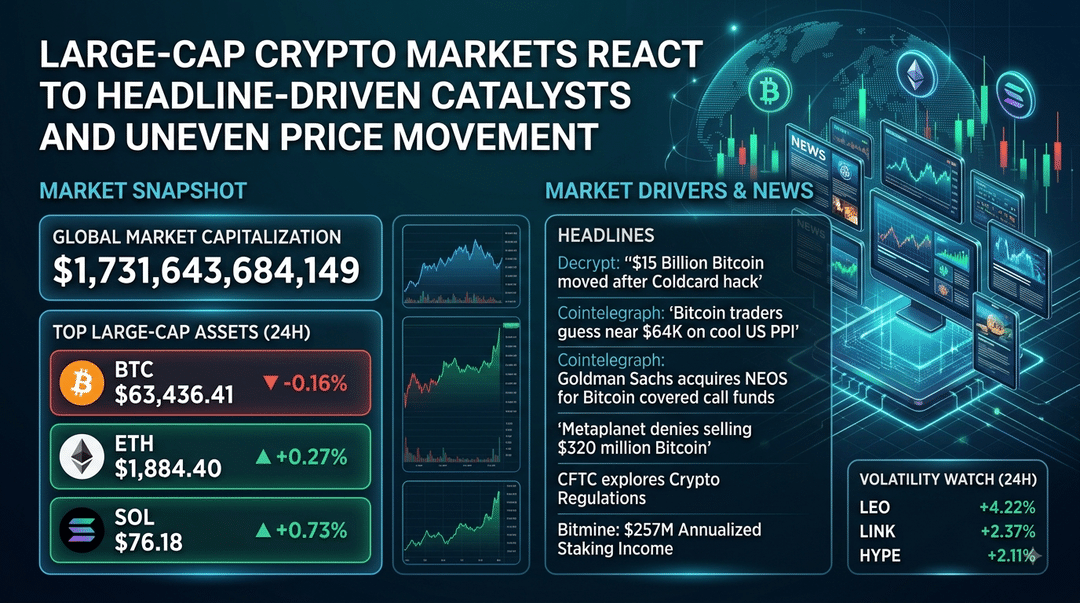
The aggregate market capitalization of the cryptocurrency sector remains substantial, with the top ten assets alone commanding a significant portion of this valuation. Currently, the leading ten cryptocurrencies represent a combined market capitalization of approximately $2.25 trillion. Bitcoin (BTC) firmly holds its dominant position, with a market cap exceeding $1.41 trillion, reflecting its status as the industry's benchmark asset. Its price, at around $70,571, experienced a slight dip of -1.96% over the last 24 hours, indicative of minor profit-taking or broader market consolidation.
Ethereum (ETH), the second-largest asset, follows a similar trajectory, trading around $2,073 with a -1.78% change. The stability of major stablecoins like Tether (USDT) and USDC, both holding their peg around $1.00 with negligible 24-hour movements, underscores their role in providing liquidity and a safe haven during periods of market uncertainty. Other significant assets such as BNB, XRP, and Solana (SOL) also registered minor declines, broadly aligning with the general sentiment seen across the larger cap assets. Interestingly, TRON (TRX) showed a positive move of 1.53%, standing out against the slight downturn of most top contenders. The overall picture suggests a period of slight retreat or consolidation following previous movements, with capital rotation occurring within various segments of the market.
Deep Dive into the Top 3 Most Volatile Coins
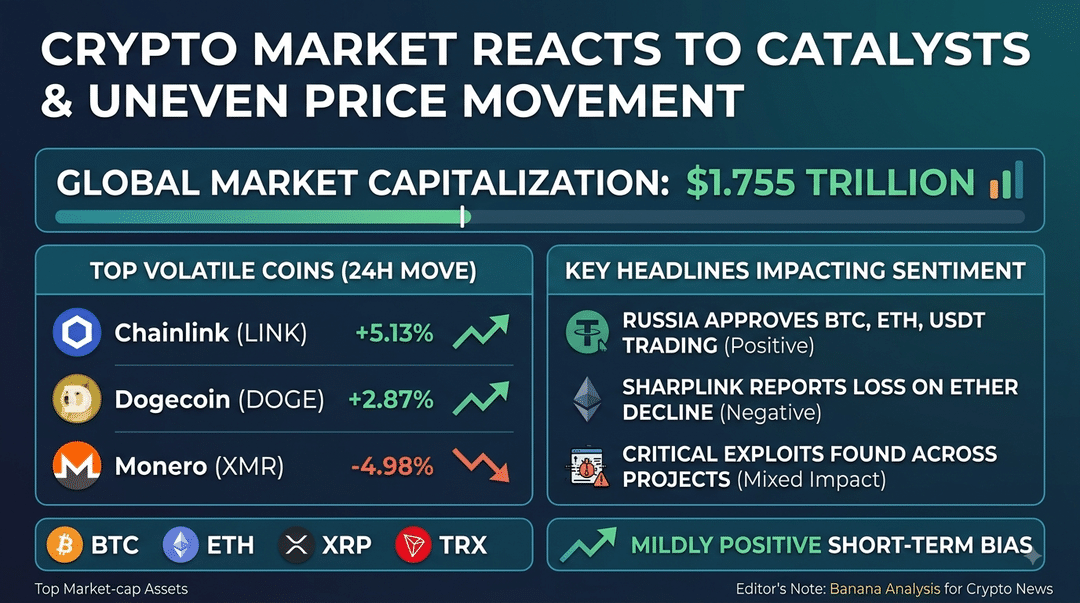
Examining the top 3 coins with the strongest 24-hour percentage moves provides insight into where short-term speculative interest or profit-taking might be concentrated. Based on the provided data, these assets have exhibited notable shifts:
Dogecoin (DOGE) - The Meme Coin's Dip
Dogecoin recorded the most significant decline among the top movers, dropping by -4.36% to a price of $0.094. As a prominent meme coin, DOGE's price action is often highly speculative and susceptible to sentiment shifts, social media trends, and broader market enthusiasm for riskier assets. A sharper decline than its peers could indicate a rotation out of higher-beta assets or a cooling in speculative interest, at least for the day.
XRP (XRP) - Navigating Regulatory Shadows
XRP experienced a -2.6% decline, trading around $1.39. Despite a news headline suggesting a recent jump, the provided 24-hour data indicates a downward correction. This discrepancy highlights the highly dynamic nature of cryptocurrency markets where intraday volatility can be significant, and news events may capture specific moments rather than a full 24-hour cycle. XRP's price movements are often influenced by ongoing legal developments and general market sentiment towards its utility in cross-border payments. Continued uncertainty surrounding its regulatory status can contribute to its volatility.
Solana (SOL) - Ecosystem Expansion vs. Price Retracement
Solana saw a -2.56% decrease in its price, settling around $87.14. SOL has been a standout performer in recent cycles, driven by its robust ecosystem of DeFi projects, NFTs, and dApps, coupled with its high transaction throughput. A retracement of this magnitude, while significant for a top-tier altcoin, could be interpreted as natural profit-taking after periods of strong gains, or a reaction to broader market cautiousness. Its long-term trajectory will likely be dictated by continued ecosystem development and user adoption.
Trending News and Their Possible Market Impact
Recent headlines paint a multifaceted picture of an evolving crypto landscape, driven by institutional adoption, DeFi innovation, and macroeconomic influences:
-
Institutional Traction and Real-World Assets (RWAs): News highlighting the resilience of crypto markets despite equity turbulence, coupled with tokenized equities and RWAs gaining institutional traction, is a strong bullish signal. Partnerships like xStocks with Nasdaq and Payward to connect tokenized equities with blockchain networks underscore a growing convergence between traditional finance and decentralized technology. This integration could unlock vast new capital flows into the crypto space.
-
DeFi and Derivatives Growth: The rapid expansion of on-chain derivatives and options trading, exemplified by Hyperliquid's open interest surpassing $1.2B and Derive's $1B open interest, signifies increasing sophistication and liquidity within decentralized finance. This maturing infrastructure provides more complex trading strategies and hedging mechanisms, attracting both retail and institutional participants. DeFi innovation, such as KernalDAO's KUSD backed by short-term business receivables and Wildcat Finance's new vault features, continues to push the boundaries of financial services on-chain.
-
Project Updates and Governance Evolution: Major project updates, like Across Protocol's proposal to convert its DAO into a U.S. C-Corp, reflect a move towards greater regulatory clarity and traditional corporate structures for decentralized entities. StarkNet introducing STRK20 for private ERC-20 tokens showcases ongoing technological innovation aimed at enhancing privacy and functionality within specific ecosystems. These developments indicate an industry striving for both innovation and institutional acceptance.
-
Bitcoin ETFs and Macro Shift: The surge in Bitcoin ETFs while gold funds face investor exodus suggests a significant narrative shift. Bitcoin is increasingly being perceived as a legitimate store of value and an alternative to traditional safe-haven assets like gold, particularly in an inflationary environment. This trend could accelerate institutional allocation to BTC.
-
Global Expansion and Tech Partnerships: Alibaba joining MetaComp's stablecoin platform fundraise signals growing interest and investment from major global players in the digital asset space, particularly in Asia. The Palantir and Nvidia team-up on sovereign AI operating system architecture, while not directly crypto-related, reflects a broader technological advancement that could indirectly benefit blockchain infrastructure through increased computational power and demand for decentralized data solutions.
Conclusion: Navigating the Future with Prudent Risk Management
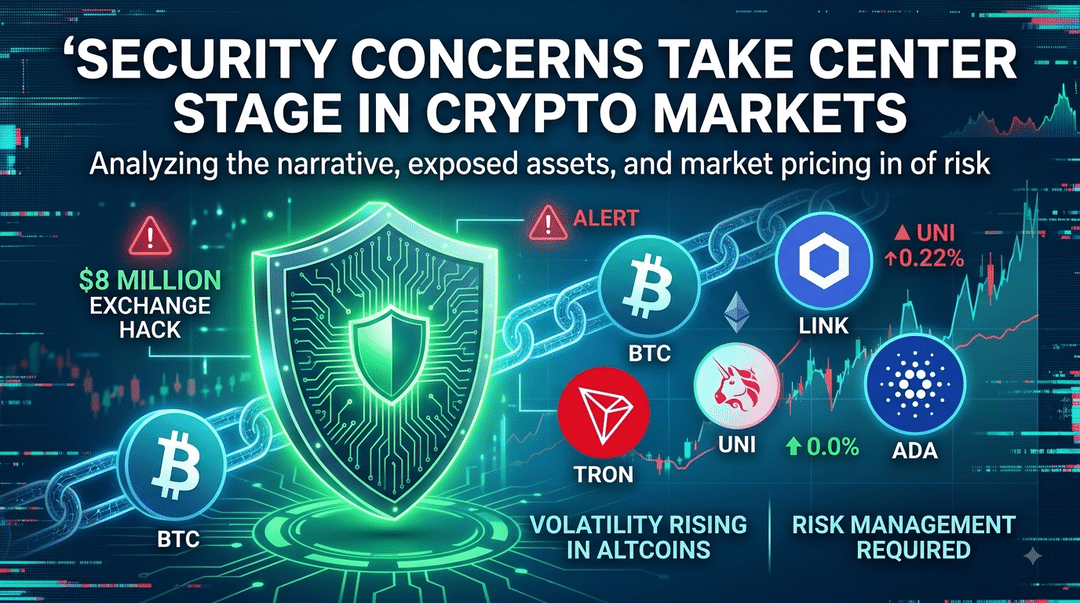
The cryptocurrency market is undoubtedly in a dynamic phase, characterized by significant institutional interest, continuous innovation in DeFi and tokenization, and evolving regulatory landscapes. While the overall market capitalization shows robust health, daily price movements, especially in volatile assets like Dogecoin, XRP, and Solana, underscore the inherent risks.
For investors, understanding these intertwined factors is crucial. We cannot overstate the importance of robust risk management. It is imperative to conduct thorough due diligence on any asset, understand its underlying technology and utility, and be aware of its specific risk profile. Diversification across different asset classes and within the crypto space can mitigate concentration risk. Employing position sizing based on your risk tolerance, utilizing stop-loss orders, and regularly reviewing your portfolio are fundamental practices. Never invest more capital than you can comfortably afford to lose, and resist the urge to make emotional decisions driven by short-term price swings or speculative headlines. The market's future remains bright with innovation, but prudence and a well-defined strategy will be your strongest allies in this journey.